
By Jim Goyjer
The Dutch may have created the Netherlands, but they did not create the ice skate. It was the Finns. Over the centuries, ice skating has brought people together in peace and battled each other in war.
We will never know how the first Homo sapiens, who emerged out of Africa over a million years ago, dealt with rivers and lakes covered with ice, as they traveled north. How did they cross those slippery slabs of white-colored frozen terrain? Even their extinct cousins, the Neanderthals and Denisovans, must have had a tough time traversing the sheets of ice. It required larger brains to figure out this transportation challenge.
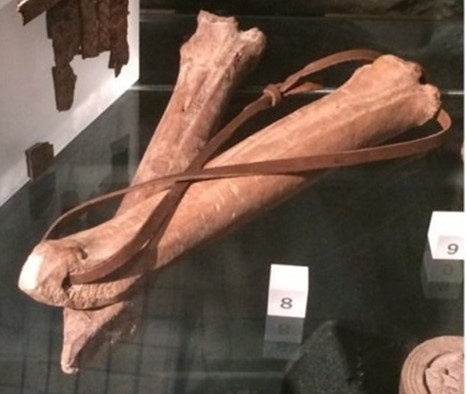
A million or so years later, the brainy Finns solved the problem. Around 3,000 B.C. the Finns wove animal ligament straps though animal bones and slid across their about 187,888 lakes in Finland to get to neighboring villages in the winter. It was a historic invention. Even the Finns were amazed seeing the first skaters glide effortlessly over the icescape on bare bones. Ice skating became the oldest human-powered means of transportation. It beat walking gingerly and falling constantly. Skating saved time getting from one place to another.
Seven hundred years after the Finns started producing iron, they thought of attaching a metal blade to skates. The earliest known skate using a metal blade was from around 200 A.D. It was discovered in the Finnish region. The skate was fitted with a thin strip of metal folded and attached to the soul of a leather shoe. When found, it was a little rusty.
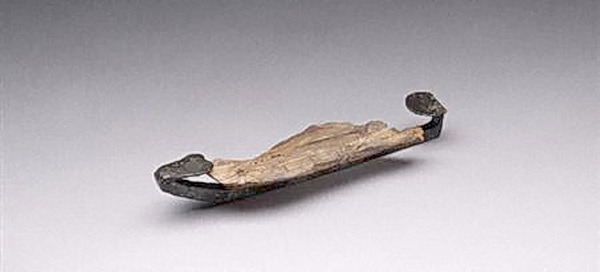
The oldest skates discovered in the Netherlands were from around 700 A.D. It was the Dutch who put the finishing touches on the Finnish invention. In the 13th century, it was the Dutch who added the now familiar edges to skates. The sharp steel edges of the blade allowed people to skate with ease, allowing the skaters to change directions quickly. Skates could now cut into the ice instead of gliding on top of it. Dutch designed skates became the standard. Beginning in 1225 skaters started appearing more frequently on the canals in Amsterdam and Dordrecht.
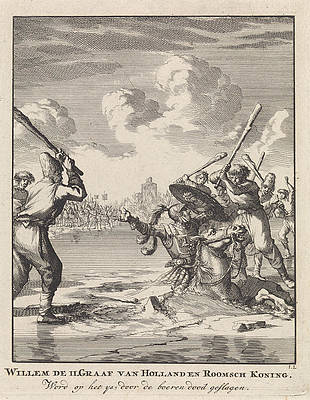
New inventions always seem to be adaptable to warfare. The oldest and most famous fight on ice in the Middle Ages was in January 1256, between the provinces of Holland and West Friesland, a region north and east of Holland’s domain. Count William II, who was the Count of Holland and ruled the province, waged several wars against the West Frisians.
The Frisians were a unique folk in Europe. They were atheists. They didn’t adhere to the feudal system that was embedded in religion, with every man having a lord above him, a king over the lords and God over everybody. Feudalisticly minded William felt a religious mission to conquer the free and faithless Frisian territories, a typical land grab by a feudal dictator clamoring for fame and fortune under the guise of religion.
During a battle near the village of Hoogwoud, dressed in body armor and seated on his horse, William found himself lost on a lake and crashed through the ice. The West Frisians skated toward him. They found him in a helpless position and killed him. We don’t know if the horse survived. The Frisian-Hollandic Wars were waged off-and-on from 1256 into the 1400s. There is no record of any more battles on Ice.
The early days of ice skating is not replete without a myth or two. One myth is about Hans Brinker and his silver skates. Less known is that of Saint Lidwina of Schiedam, a historic town west of Rotterdam. Lidwina was born, one of nine children, into a poor farming family in 1380. She was a mystic. At an early age she saw religious visions. She never envisioned her ice skating accident.
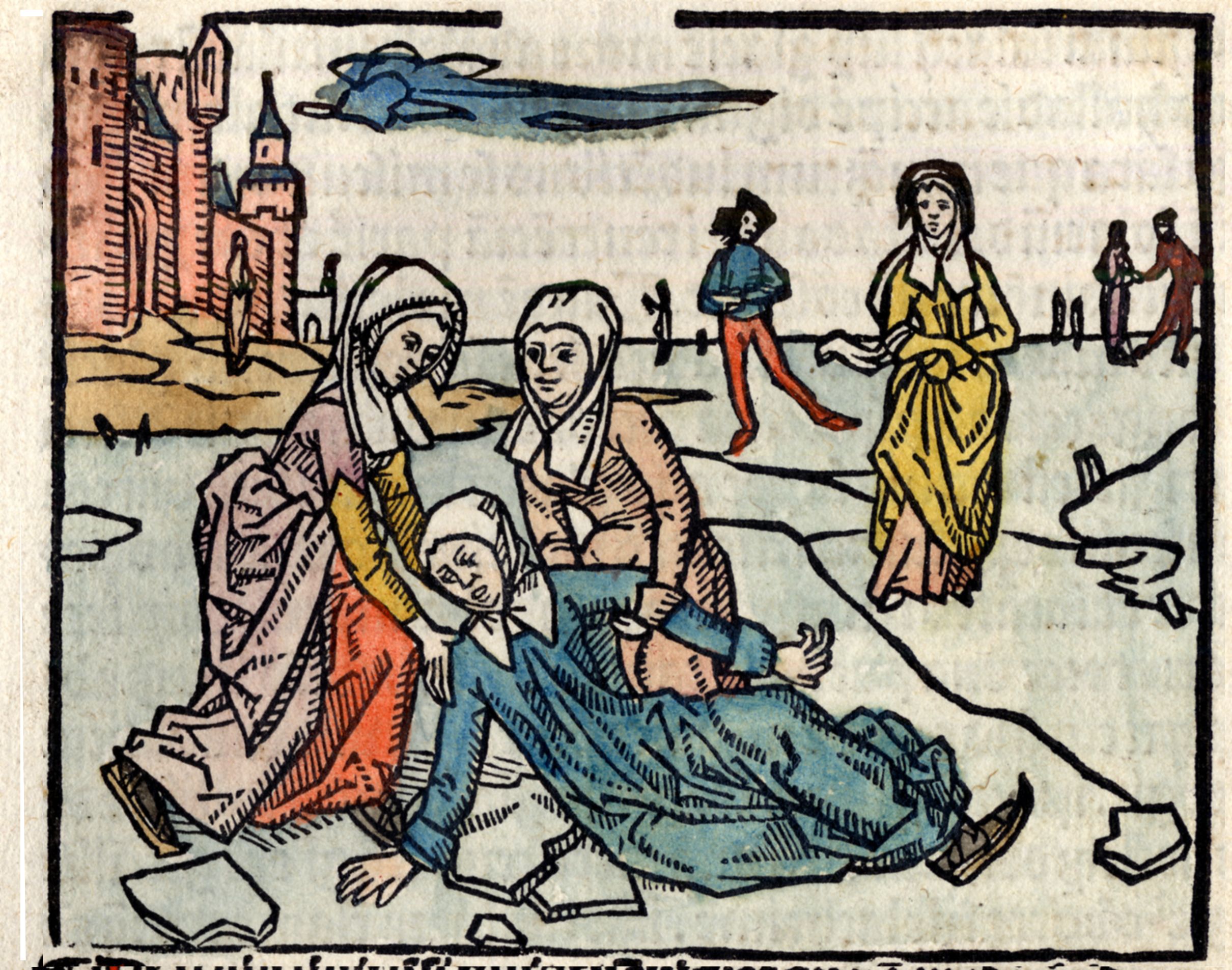
When she was about fifteen, while skating with a few friends, she fell on the ice, breaking a rib. It became infected, which got worse over the years. She never recovered from the accident. She would remain bedridden until she died in 1433, at the age of 53. Due to her religious zeal throughout her painful existence, she was canonized by Pope Leo XII in 1890. Lidwina became the patron saint of the chronically ill and of ice skating.
In the 13th and 14th centuries wood was substituted for bone skates, and in 1572 the first iron skates were manufactured by the Dutch, just in time for The Eighty Years’ War or the Dutch War of Independence from Spain (1568-1648). King Philip II of Spain created the infamous Inquisition and attacked the Netherlands to root out atheists, freethinkers, Protestants, Jews, Muslims and anyone else who was not his kind of Catholic. They were tortured, forced into confessions, and burned at the stake to “save” their souls. Many of those souls who did not want to be saved had skates.
Unable to win over the Dutch, Phillip started sending in more troops. They ransacked cities and towns, even towns that had been loyal to Spain and Catholicism, killing an estimated 100,000 people. Most of these cities didn’t have armies to fight the Spanish troops as they marched toward Amsterdam. Many towns were at least able to flood the surrounding areas stopping Spanish troops that were unable to wade through the water.
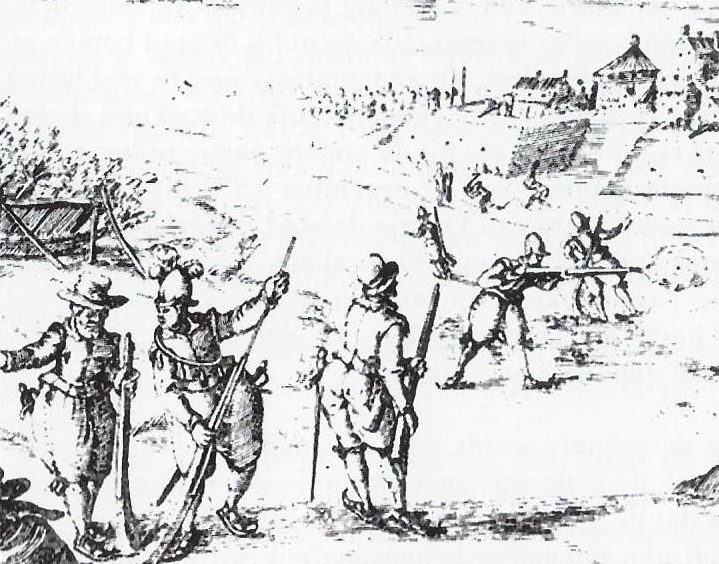
Amsterdam was the prize for the Spanish. They decided to take the city by attacking with ships in the harbor. It was winter and the Dutch fleet was frozen in the port of Amsterdam, unabling the Dutch to confront the Spanish ships head-on. The Spanish took advantage of the situation and decided to march on foot over the ice and attack the ships. As they marched gingerly across the frozen ice, they were suddenly confronted by waves of Dutch soldiers flying across the surface of the ice with unbelievable speed. The skating militia came into range just long enough to fire a musket before retreating behind walls of ice and frozen snow.
The Spanish soldiers were stunned, they had never seen anything like it: “It was a thing never heard of before today,” the Spanish Duke of Alva, who led the troops, described the scene with astonishment, “to see a body of musketeers fighting like that on a frozen sea.”
Alva ordered a quick retreat, which wasn’t easy while slipping and sliding on shoes and frostbitten toes. The Dutch skaters pushed Alva’s men back to their ships, killing several hundred along the way. A Few Dutch soldiers were killed and Alva was able to send a pair of skates back to the king of Spain. The king got the message and ordered 7,000 pairs of ice skates made. The Spanish military started taking skating lessons.
Although the Spanish became decent skaters, in the end the Dutch defenders had the edge by skating circles around the Spanish troops, forcing them to skate on thin ice and plunging them into the freezing waters. The war of liberation lasted for 80 years and by 1648, the Netherlands had driven out the Spanish with skates and all.
Wars in winter have never fared well for Dutch foes. Louis XIV of France, who wanted possession of the Netherlands after Spain left, signed (1670) a secret Treaty with England against the Dutch. Louis invaded the Dutch Republic in May 1672, supported by the British, and occupied seven provinces. But again, the main prize was Amsterdam. The Dutch opened the dikes around the city, flooding a large area, and held off the French. Then winter came. At the end of January 1673, as the ice set in, 500 Frenchmen with 300 sledges were on their way to Amsterdam plundering several towns along the way. Four hundred volunteers from The Hague and Dordrecht, with muskets in their hands and skates on their feet, sent the French back to the Seine.
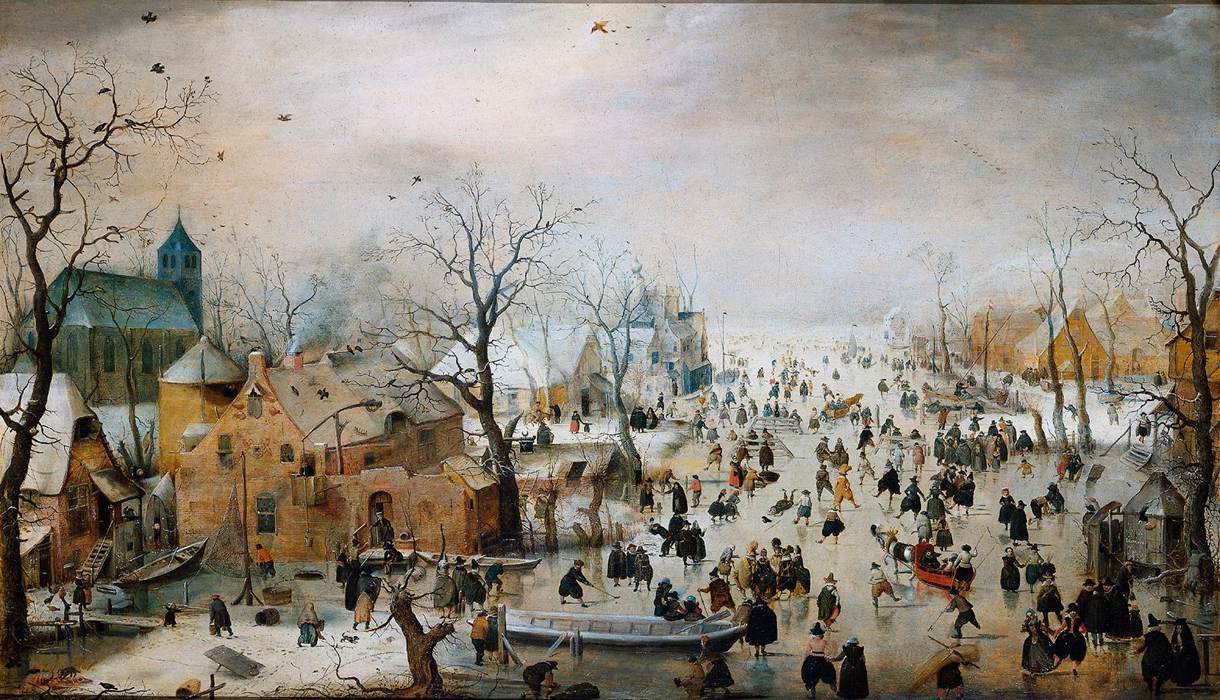
By the 17th century, skating in the Netherlands had become hugely popular among all social classes. It was the first time that the rich, the poor, the skilled, the unskilled, the educated and the uneducated mingled and got to know each other on an equal footing. Skating developed into a collective melting pot of diverse humanity. It was also a great venue to find a skating partner to date. Skating became so popular that painters became the paparazzi of the Golden Age. The Old Masters couldn’t get enough of recording skaters, of all ages, skating on the rivers, canals and lakes.
It was not enough to just mozie around the ice, so the Dutch originated speed skating and skating as a sport. Speed skating from one town to another became a challenging winter event. The first known skating competition was held on December 19, 1676, when four skaters skated to twelve towns in North Holland, Including Amsterdam. It was a 300 kilometer (186 miles) tour that began at 4 a.m. and lasted until 8:30 p.m. when they all arrived. Unfortunately, nobody cared. It was repeated once and still no one cared. It was never repeated.
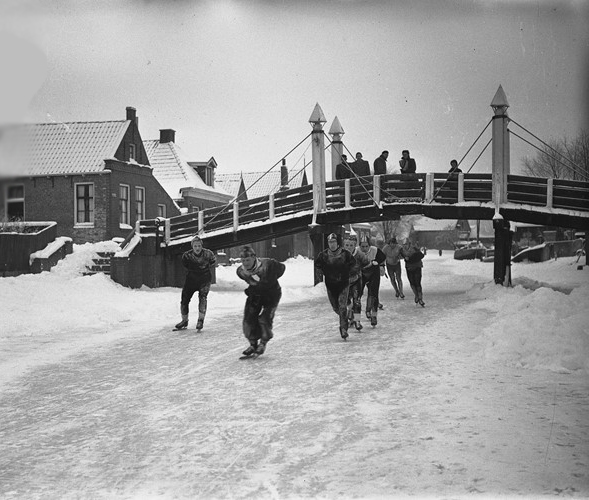
A hundred years later in 1749 skilled skaters began skating to eleven cities in the Dutch Province of Friesland. It gained many fans and participants and became a phenomenal success. Officially called the Elfstedentocht (the ‘Eleven Cities Tour’), it turned into an organized sport in 1909. As a result of global warming, the Tour has become less frequent. Approximately 16,000 skaters participate when conditions are right.
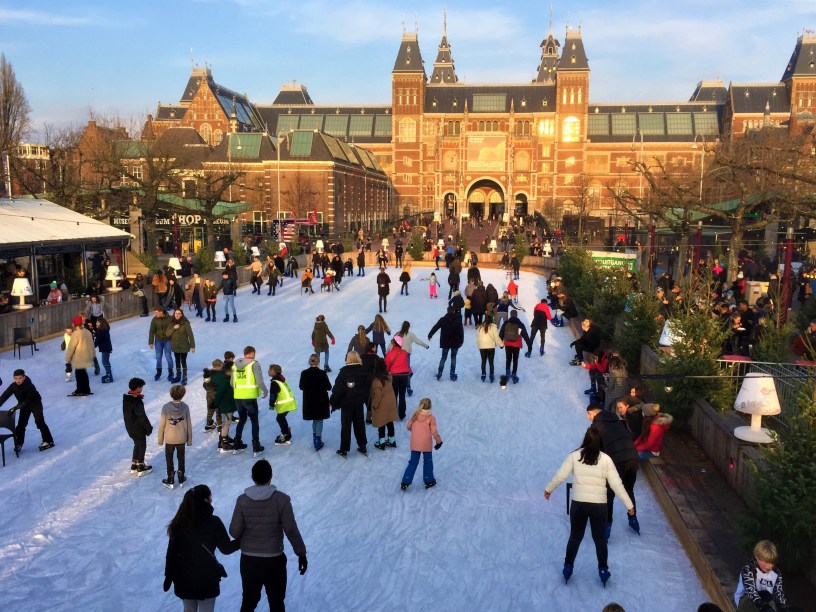
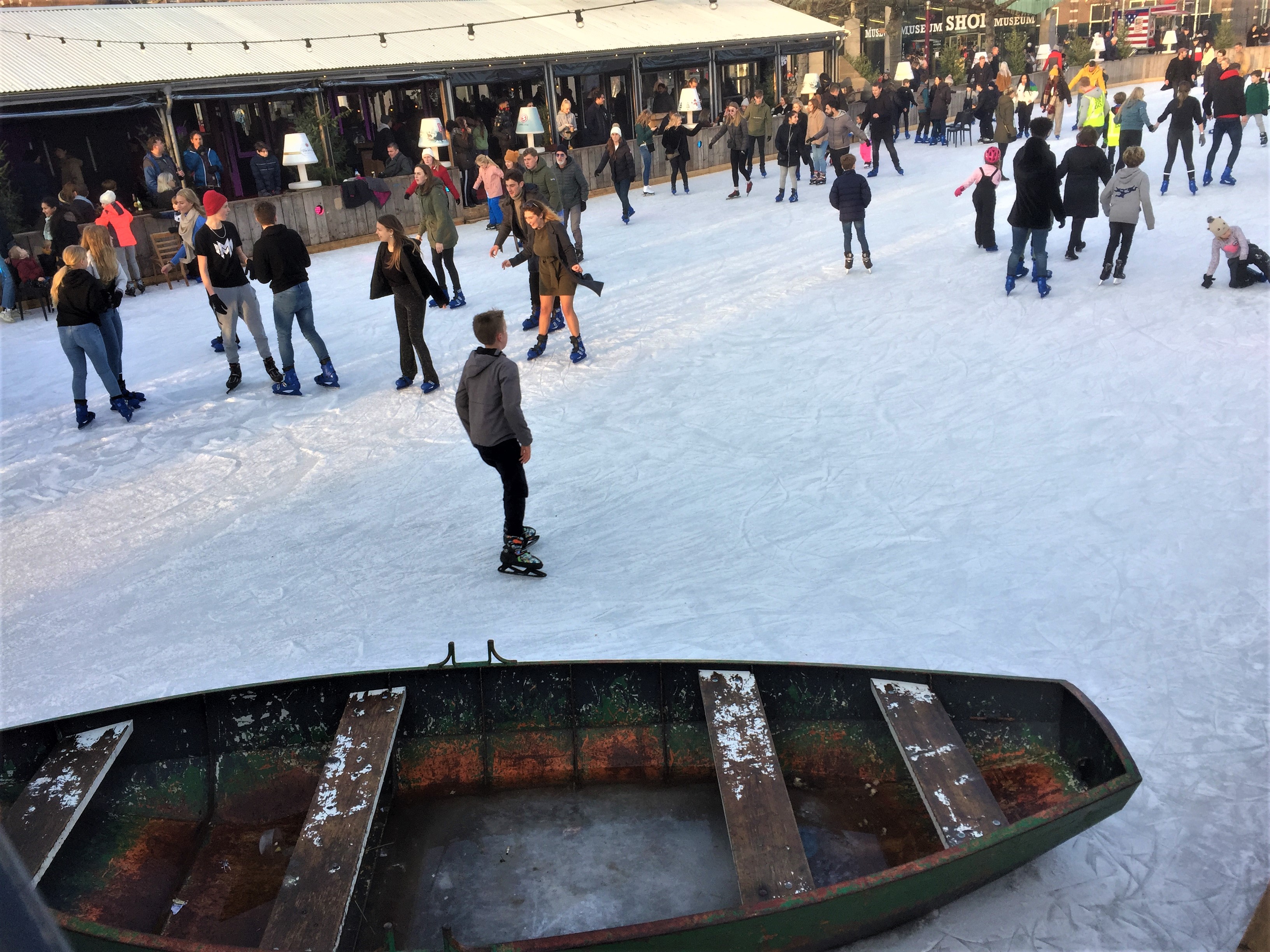
The rest of Europe caught on to the skating craze and in 1742 the world’s first skating club, the Edinburgh Skating Club, was created in Edinburgh, Scotland. One of the oldest of these clubs in the Netherlands was the Amsterdam Ice Skating Club (AISC), founded at the end of December 1864 near today’s Olympic Stadium. The eight founding members worked in the shipping trade, and almost all of them came from Friesland. Later the club moved to behind the Rijksmuseum, where its visibility attracted several thousand members.
The first speed skating events were held in 1863 in Oslo, Norway. Not to be outdone by the Norwegians, in 1889, AIJC hosted the first unofficial World Championships, bringing together Dutch, Russian, American and English teams. The unofficial event required skating three separate distances in 1890 and 1891. In the 1891 event the American skater Joe Donoghue succeeded in completing all three distances, becoming the first speed skating world champion in history, unofficially, of course.
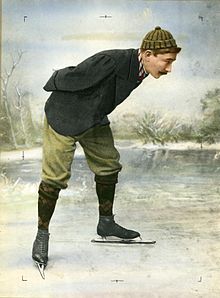
The first official World Allround Speed Skating Championships was held in January 1893 on an ice rink behind the Rijksmuseum. The winner was awarded a cup valued at 600 guilders and a wide orange sash. The skaters had to compete in four international races over four distances: 500, 1,500, 5,000, and 10,000 meters. Jaap Eden from Haarlem won them all and was the first official world speed skating champion, winning the cup and the sash.
Speed skating appeared for the first time in 1924 at the first Olympic Winter Games in Chamonix, France. Initially, only men were allowed to participate. It was not until 1932 that women were permitted to compete in speed skating at the Lake Placid Games in New York State. But it was only considered a demonstration sport. Women’s skating lib came at the 1960 Games in Squaw Valley, California, when women’s speed skating was officially included in the Olympic program.
In 1892 the International Skating Union (ISU) was founded in Scheveningen, the Netherlands. ISU brought together skating organizations from Great Britain, the United States and Canada, as well as other national skating groups. It became the world governing body for speed skating, ice dancing, and figure skating. It sanctioned speed skating as well as figure skating and sponsors the world championships held annually since 1896. With more than 50 member nations, the ISU establishes rules about the conduct of skating and skating competitions.
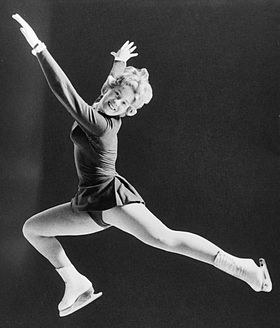
Figure skating was never the Netherlands’ strength, except for Sjoukje Dijkstra who, after taking her sixth consecutive national title, went on to win gold at the 1964 Winter Olympics in Innsbruck, Austria. It was the first gold for the Netherlands at the Winter Olympics. She is the last person from the Netherlands to have won Olympic gold in ladies’ figure skating, after winning a silver or bronze medal at a prior Olympics.
The Netherlands’ true skating strength is speed skating. Skating wars between countries and regions morphed into speed skating competitions. Speed skating is one of six sports to appear in every Winter Olympics since its debut in 1924. Dutch speed skaters have earned, as of 2022, 133 medals and lead the world with the most gold, silver and bronze medals.
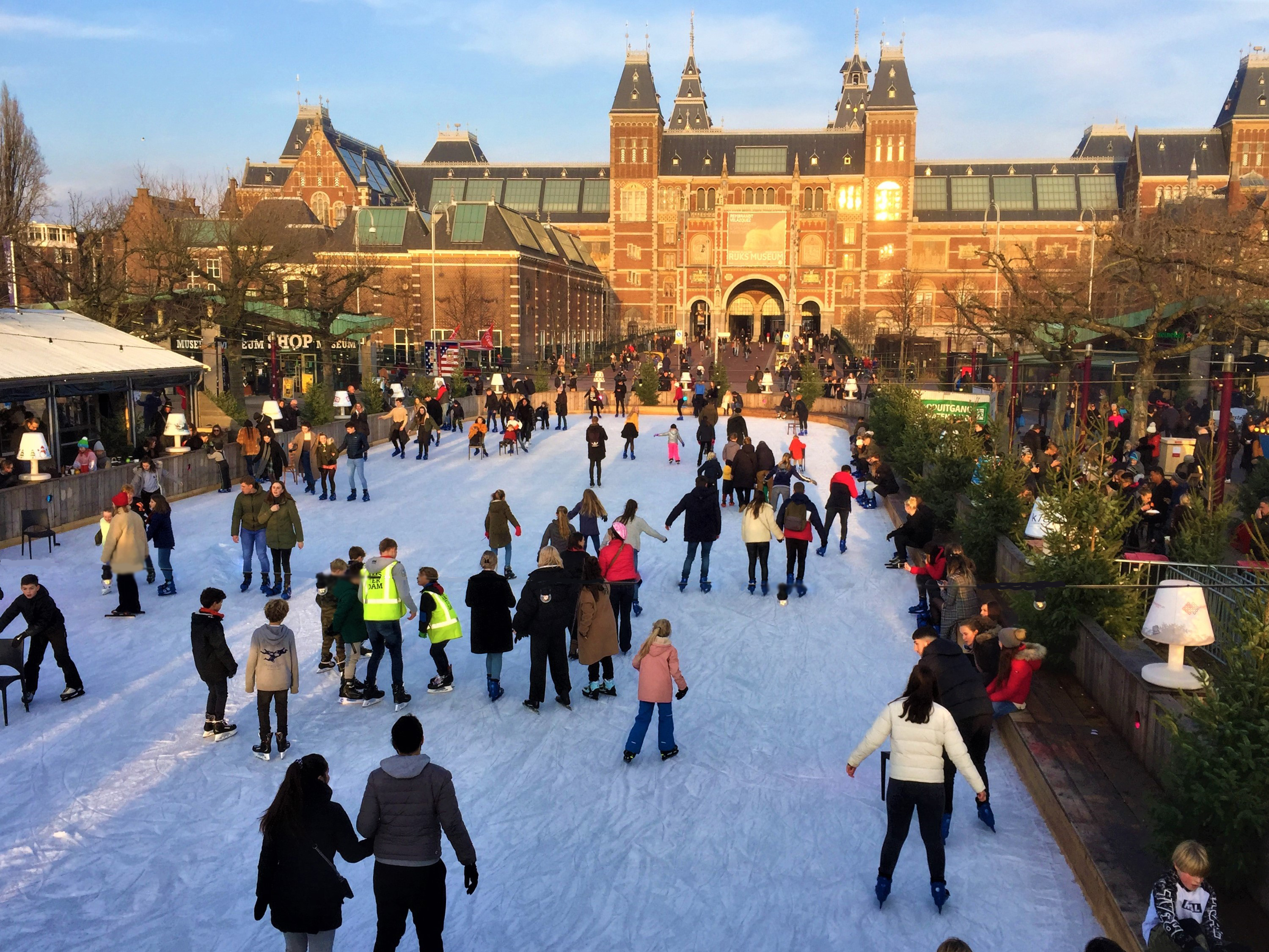
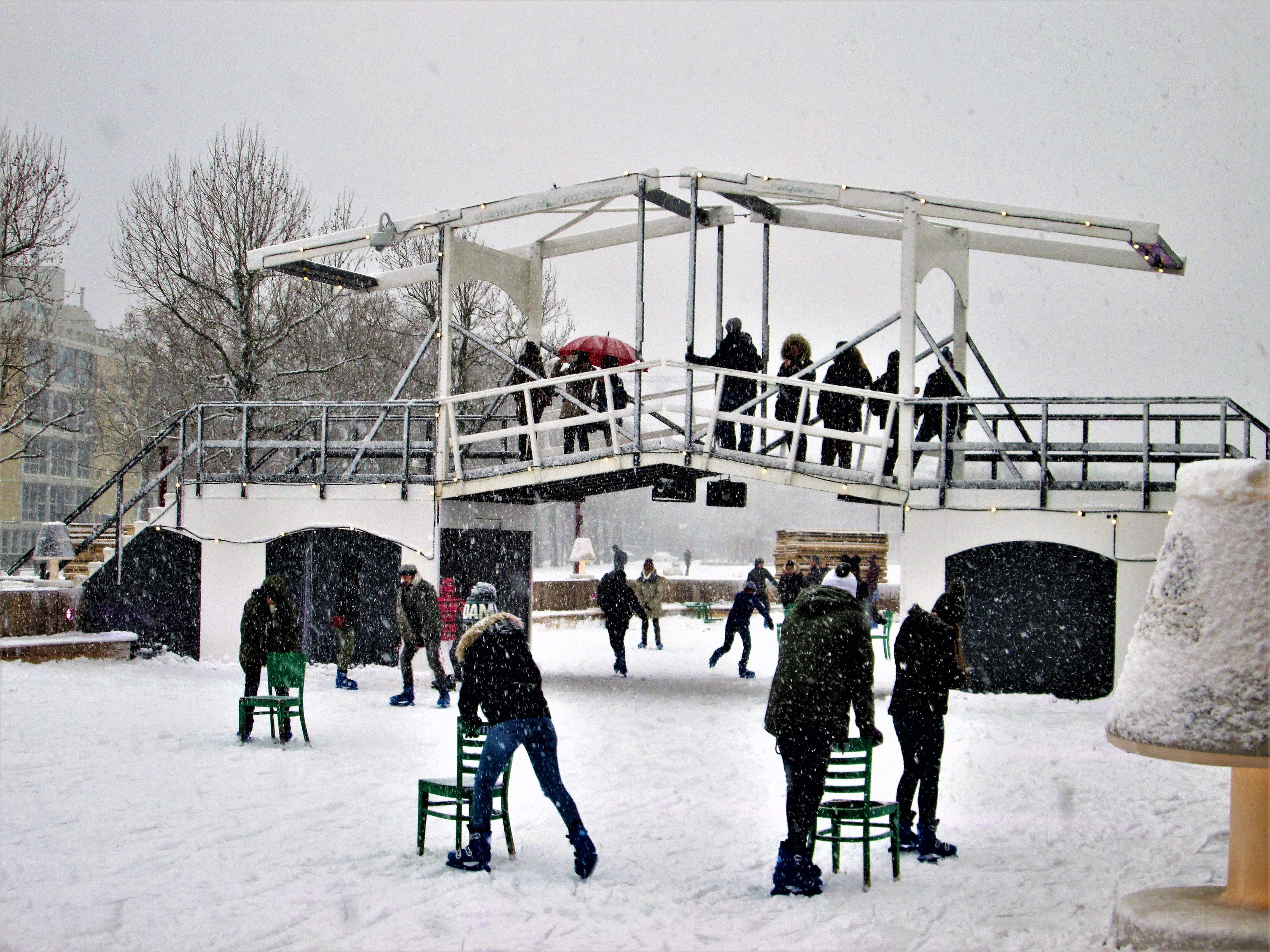
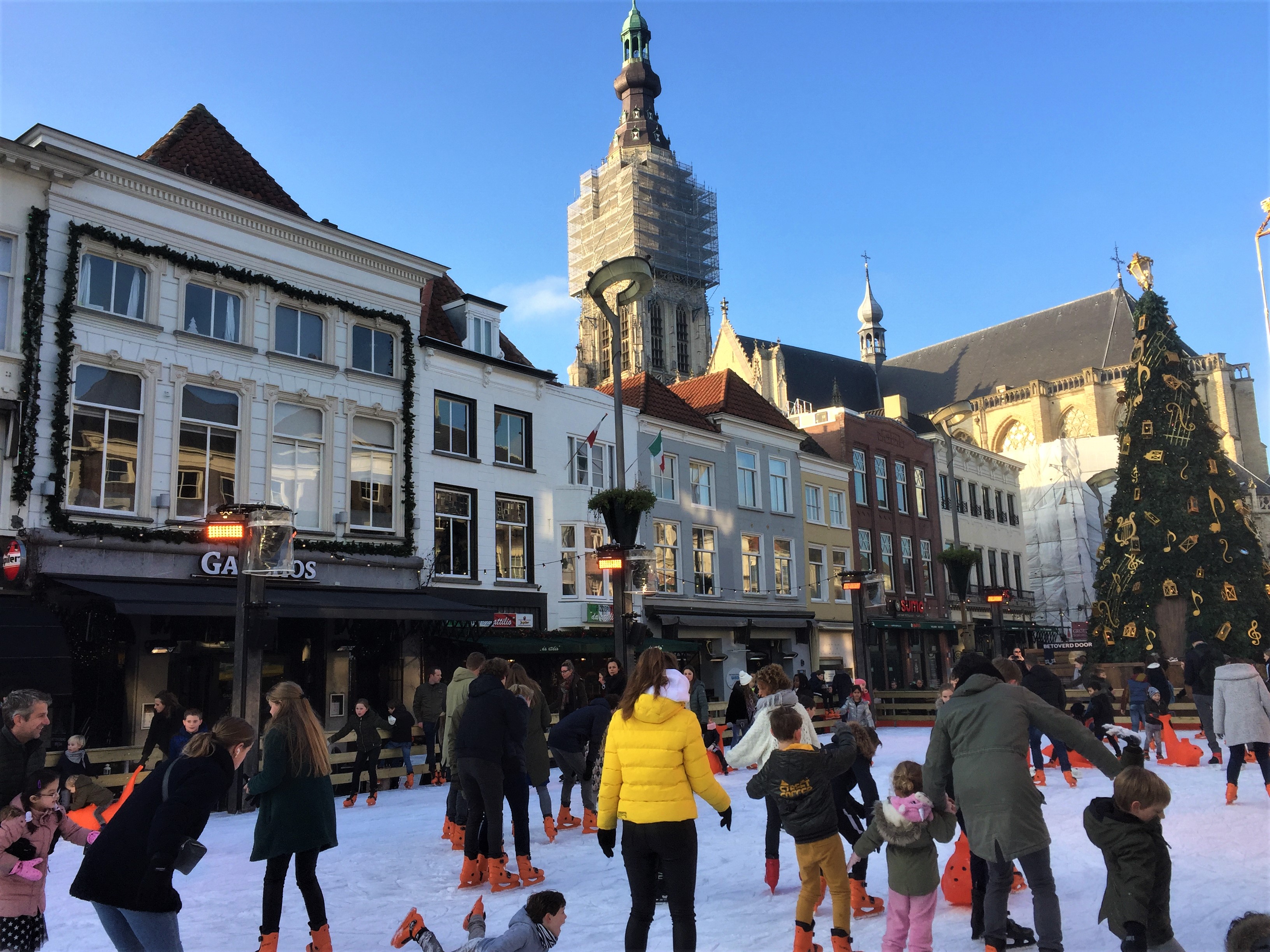
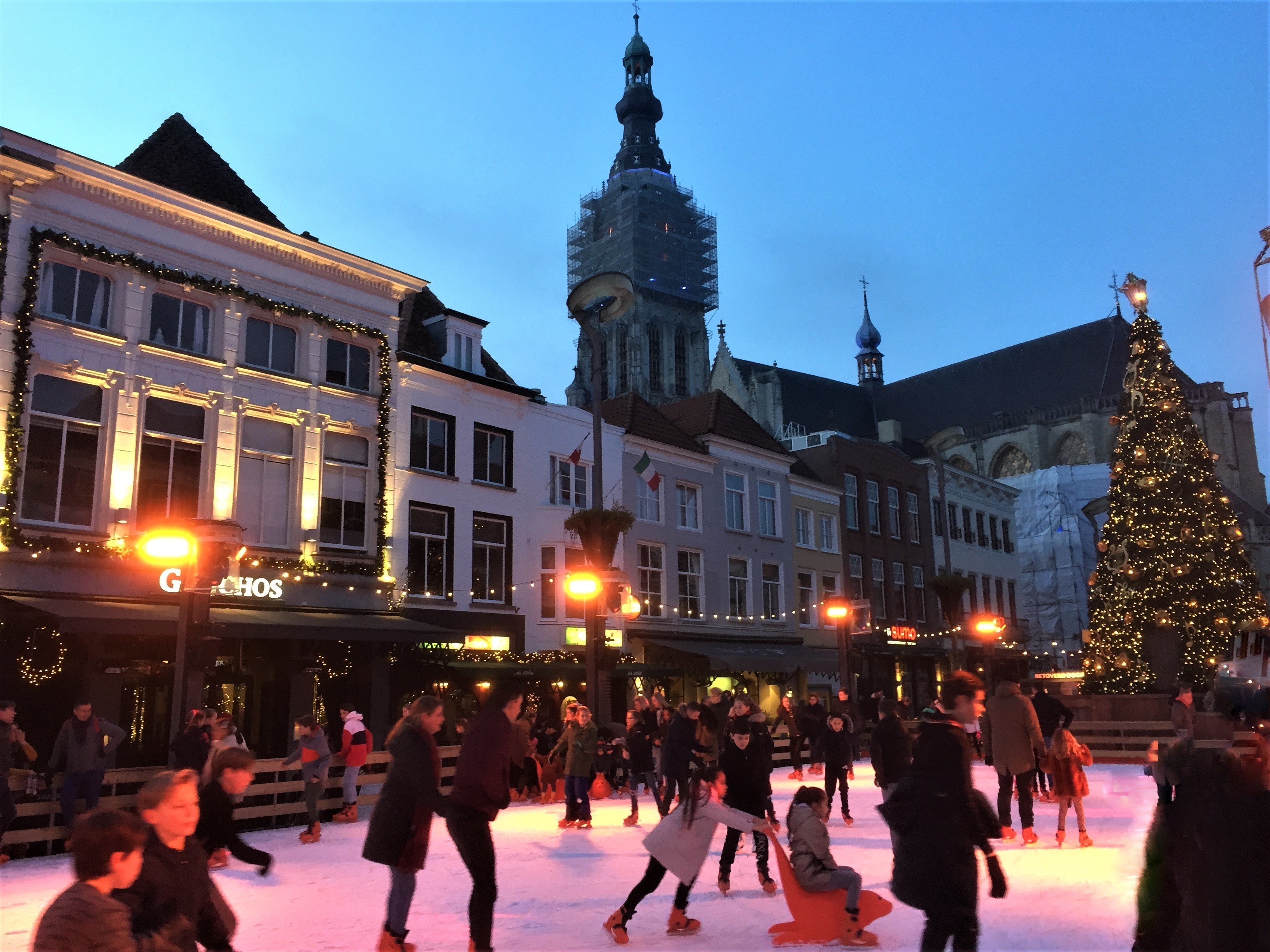
Global warming has dampened outdoor skating in the Netherlands, but it has not diminished the love for ice skating. The last time anyone skated on the canals of Amsterdam was in 2012 and the last time the 200 kilometer (124-mile) Elfstedentocht was skated was in 1997. Fortunately, there are numerous indoor ice skating rinks across the country, ranging from large, professional facilities to smaller ones. There are 20 long-track ice-rinks in the Netherlands, while there are only six of those in the entire US.
The Dutch may not have invented the ice skate, but they have made it a world renowned national pastime and sport.

© Jim Goyjer Photography and Article
 Jim And Nanci Travels