
By Jim Goyjer (10 min read)
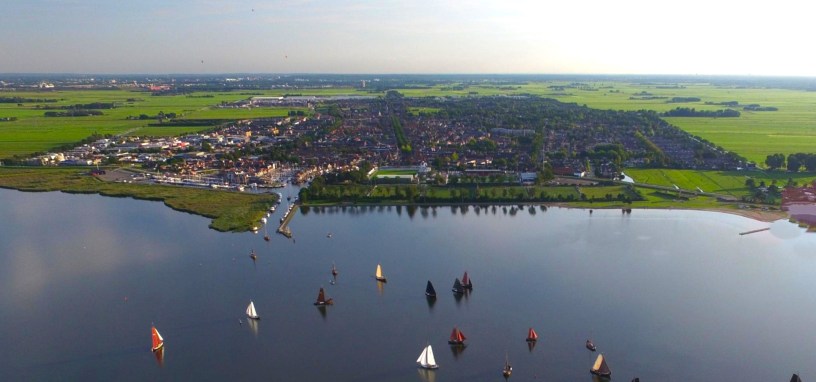
Farming and fishing are joined at the hip in the Dutch municipality of Bunschoten-Spakenburg. Bunschoten is a farming town with a rich past and culture that dates to pre-history. Next door is Spakenburg, the most famous fishing village in the southern area of the Netherlands. It’s located along the former Zuider Zee (Southern Sea), which is now broken up into two big lakes, Ijsselmeer and Markenmeer. During the 20th century, the two towns prospered, added residents and grew closer toward each other. They wedded in 1965 to become the town of Bunschoten-Spakenburg.
Bunschoten was established in 1204 by the Roman Catholic diocese of Utrecht. The town was located near the mouth of the Eem river and held a strategic military position in the area. It received city rights from the Bishop of Utrecht in 1383. City rights allowed the residents to self-government, construct a bridge and build an earthen wall around the medieval town. As a result, the farming community developed the surrounding peat area into long, narrow strips of grassland, bordered by ditches and waterways.
The earthen fortifications didn’t last long. Part of the town was destroyed around Christmas 1427, during a war between two rival Catholic Bishops. So much for peace on earth and good will toward men. The wall was never rebuilt. During the Middle Ages, Bunschoters did some field crop farming, but cattle breeding was their main source of income, and their horse-trading market was famous. Taxing the consumption of beer and collecting a bridge toll over the river Eem added to the town’s wealth, which had to be split with the Bishop of Utrecht or some other overlord at the time. It was an early version of quid pro quo.
The fishing village of Spakenburg originated between 1300 and 1350. Spakenburg had a natural harbor that was coveted by those who liked boating and trading with the outside world. Fishing was not a source of serious income. It was more of a hobby or a sport. For many centuries Spakenburg was considered a footnote to Bunschoten until the 18th century, when it outgrew its neighbor due to the success of commercial fishing with the use of “botters.” Times were good in the Netherlands. The economy and the population grew, causing a demand for more fish to eat.

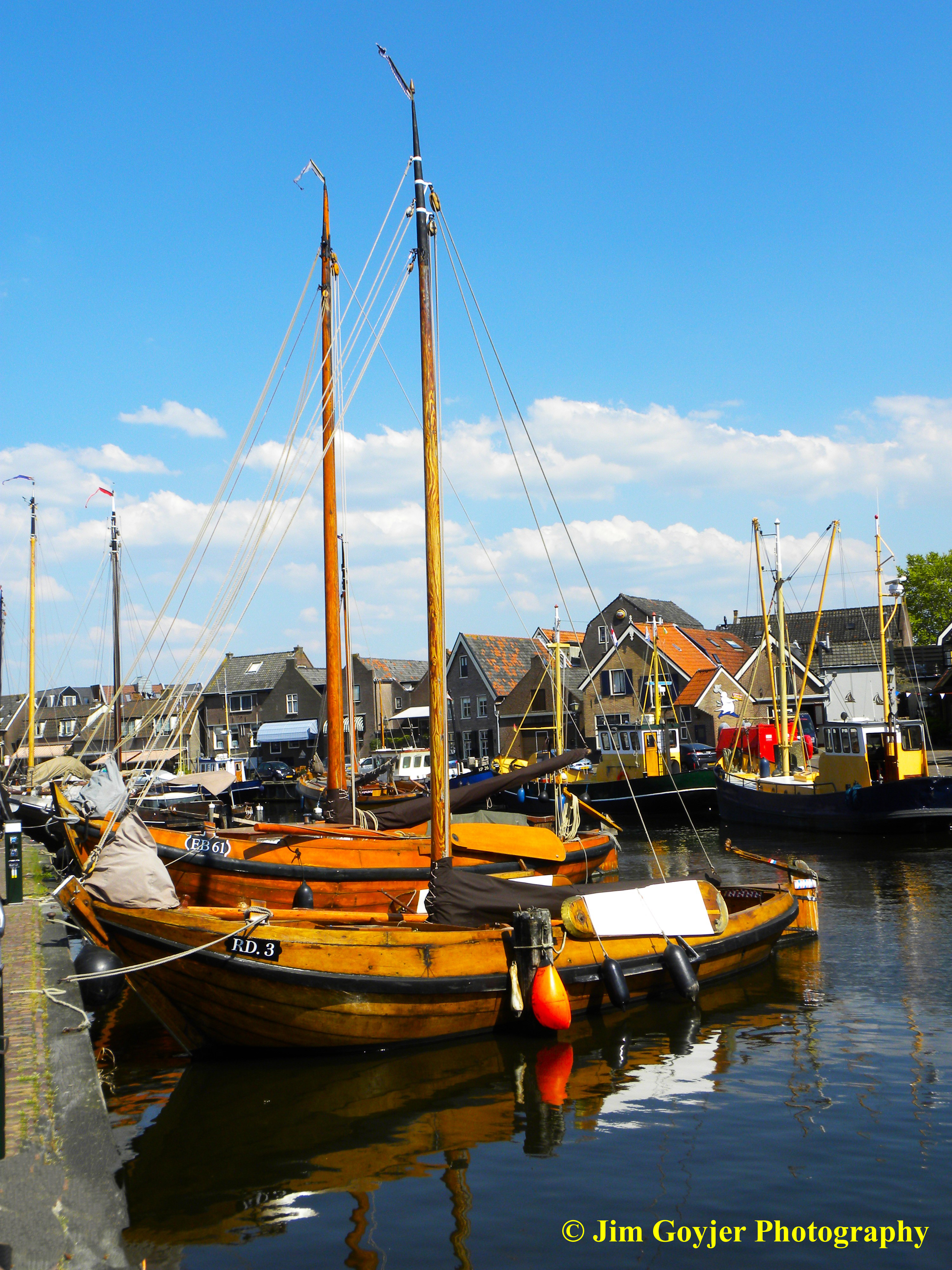
A “botter” is an old, uniquely constructed, fishing vessel with a flat bottom. It was developed in the second half of the 18th century for fishing in the shallow waters of the former Zuiderzee and along the North Sea coast. The botters were fitted with a “bun,” a storage compartment for storing fish. This compartment was designed so that fresh water could flow in through small holes in the hull. The botters’ sails were originally brown, because they were treated with a tan-colored disinfectant that protected the sail against Inclement weather. The disinfectant might have been dark amber beer, which was plentiful in those days.
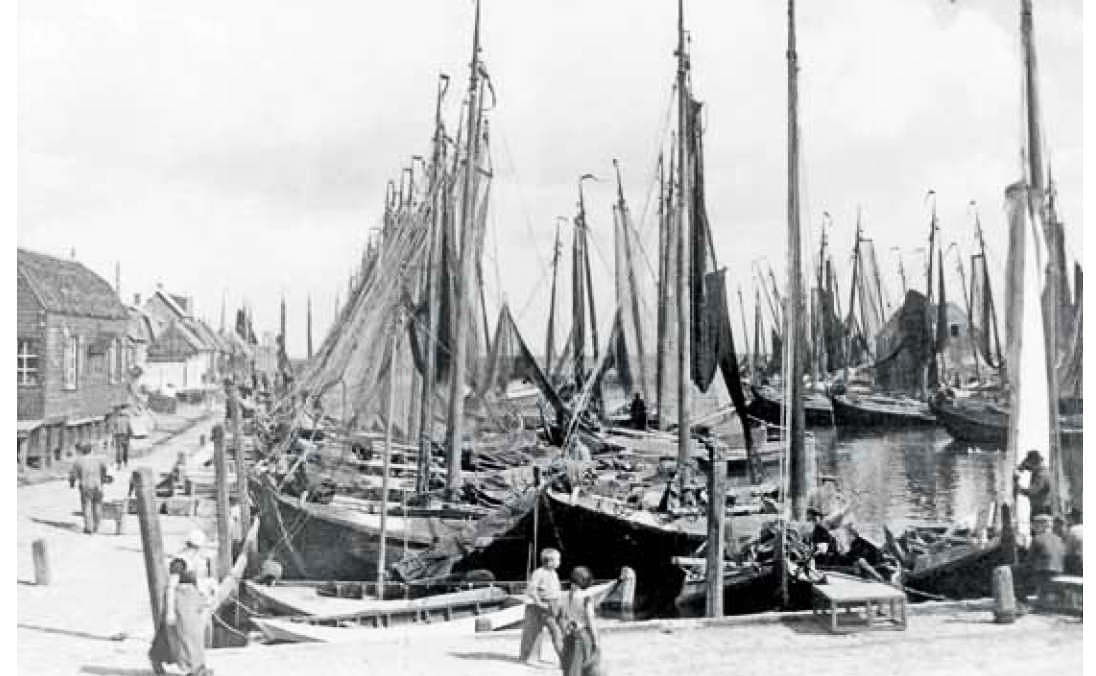
In the early 19th century, commercial fishing in Spakenburg experienced explosive growth. The number of ships went from 34 in 1812 to over 200 ships in the early 1900s. A devastating flood in 1916, that primarily affected areas and towns along the Zuiderzee, resulted in closing the inland sea by constructing a 32 km (20 mi) long dike called the Afsluitdijk (Shut-off-dike). For the fishermen, this was the end of commercial fishing. To maintain Spakenburg’s legacy, the heritage wooden botters are still being built, repaired and moored in the Oude Haven, along with present-day sailing yachts. This picturesque port has the largest fleet of “botters” in the Netherlands. Today, about 30 of the iconic wooden fishing boats can be viewed any day of the week in Oude Haven.
Enter Elvis. Teunis Elissen van Bunschoten was born in 1643 in Bunschoten. He left his hometown and settled in the colony of New Netherland in America. Established in 1614, New Netherland was the first Dutch colony in North America, and it covered parts of what is now New York, New Jersey and four other states on the East Coast. Teunis married and settled in Kingston, New York. He was a landowner, an inspector of chimneys, served in the cavalry, was a magistrate, and a church deacon. The couple had 10 children. He died in 1728 at age 84 and left lots of descendants in his wake. Elvis Presley was one of those descendants. There were nine generations between Teunis and Elvis Presley. Another Dutch connection would reemerge centuries later, after Teunis’s death.

That connection was made with a Dutchman who discovered, managed and made Elvis Presley one of the world’s biggest stars. Andreas Cornelis van Kuijk, aka “Colonel (Tom) Parker,” was born in 1909 in Breda, the Netherlands. In 1927, at the age of 18, van Kuijk entered the US illegally by jumping from the ship on which he worked. He became a shady hustler and a crooked promoter. After a long career in promoting events and managing country music singers, Parker discovered Elvis in 1955. He became Presley’s manager until Presley’s death in 1977 at the age of 42. Elvis has maintained his popularity until this day. Parker died in 1997 at the age of 87. He died an illegal alien, in obscurity, never to be heard from again, except in the recent movie “Elvis.”
In August 2015, the Spakenburg Museum held an exhibition about emigrants from Bunschoten-Spakenburg who became famous or noteworthy. The main focus was on Teunis Elissen van Bunschoten’s descendant, Elvis Presley. On display in the small museum were numerous posters, photos, and newspaper articles on the “King of Rock and Roll.”
A section of the Oude Haven (Old Harbor) and the aged Spuisluis (Sea Lock) in Spakenburg disappeared after the Second World War. But, thanks to funding from the Grebbelinie history and culture project, the harbor and the lock were restored in 2011 to their former glory. The harbor and the lock formed part of the Grebbelinie (Grebbe Line), a defense line of the Dutch Water Line system. The Grebbelinie was built in 1745 to protect the Netherlands from invading armies by flooding the land with water, deep enough that the enemy could not cross by foot, on horseback or by swimming freestyle. The water defense system reached all the way from Spakenburg to Utrecht, 40 km (25 mi).
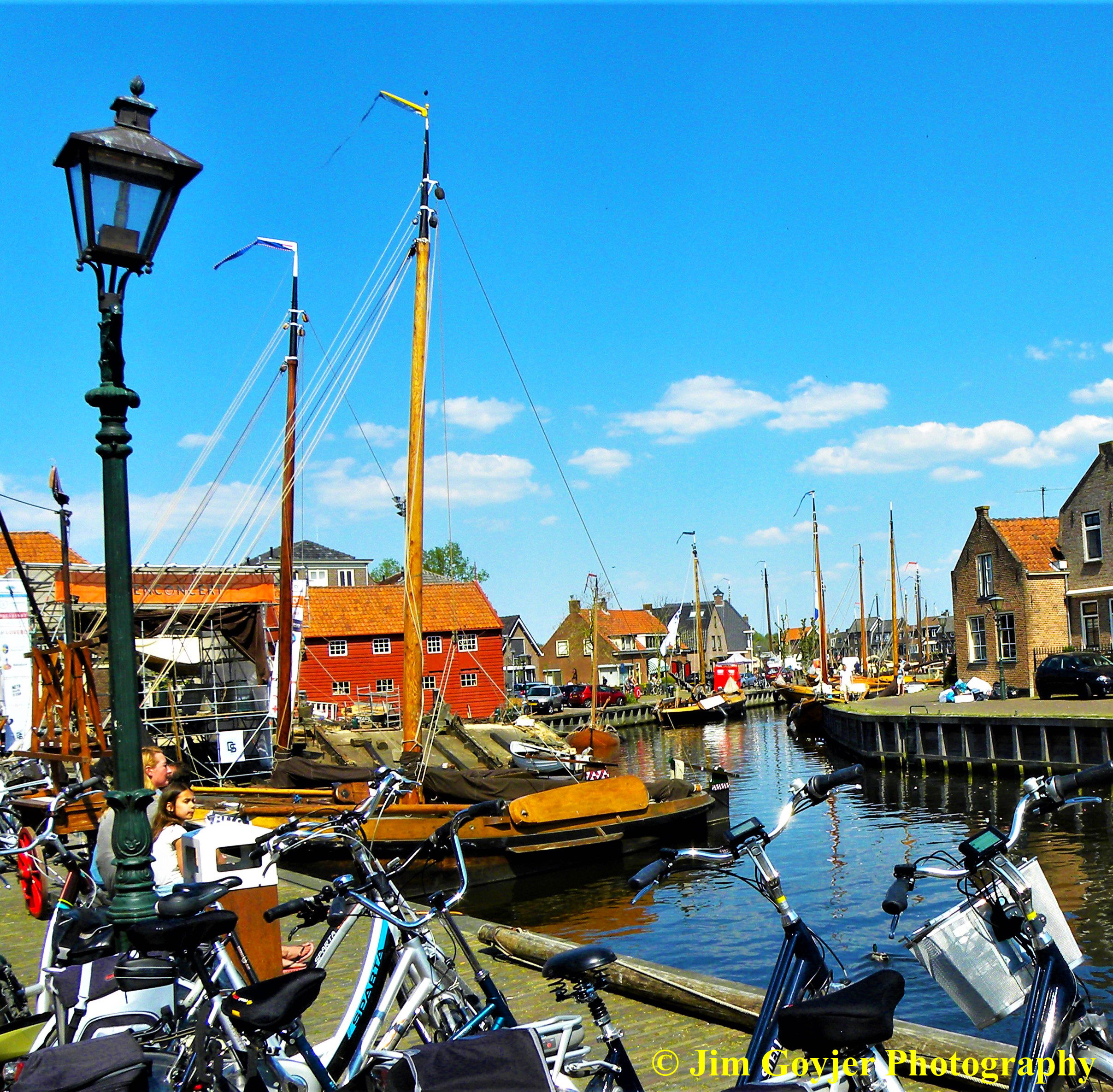
After the restoration, the botters were able to return to their old haunts. They are now moored again in an authentically recreated, beautiful harbor, reminiscent of the good old days. The harbor and the lock have been designated national monuments and are protected by the government. No cruise ships and river boats allowed.
Bunschoten-Spakenburg is now a popular tourist spot with outdoor cafés, restaurants, local taverns, art and craft shops, boutiques, three museums, and hotels, and visitors can sail on one of the old-fashioned botters. No cars are allowed in the center of town, but free parking is nearby. It is also one of the few areas in the Netherlands where you can still see people dressed in their traditional Bunschoten-Spakenburg attire.

Shortly after the Second World War, almost every resident in Spakenburg still wore traditional clothing, including men, women, and children. Around the 1960s, more and more people switched to off-the-rack, ready-made, modern clothing. In 2015, traditional clothing was still worn by around 175 women. Today, primarily older women wear traditional dresses daily. But, during special events, you can still see residents of all ages dressed in their traditional clothes, because it’s an important part of their heritage and identity.
Take a day, any time of the year, to visit Bunschoten-Spakenburg. It is worth the visit to soak up some Dutch maritime history and culture along the old Zuiderzee.
(Cover Photo Courtesy of Gemeente Bunschoten-Spakenburg)



 Jim And Nanci Travels