

By Jim Goyjer (20 min read)
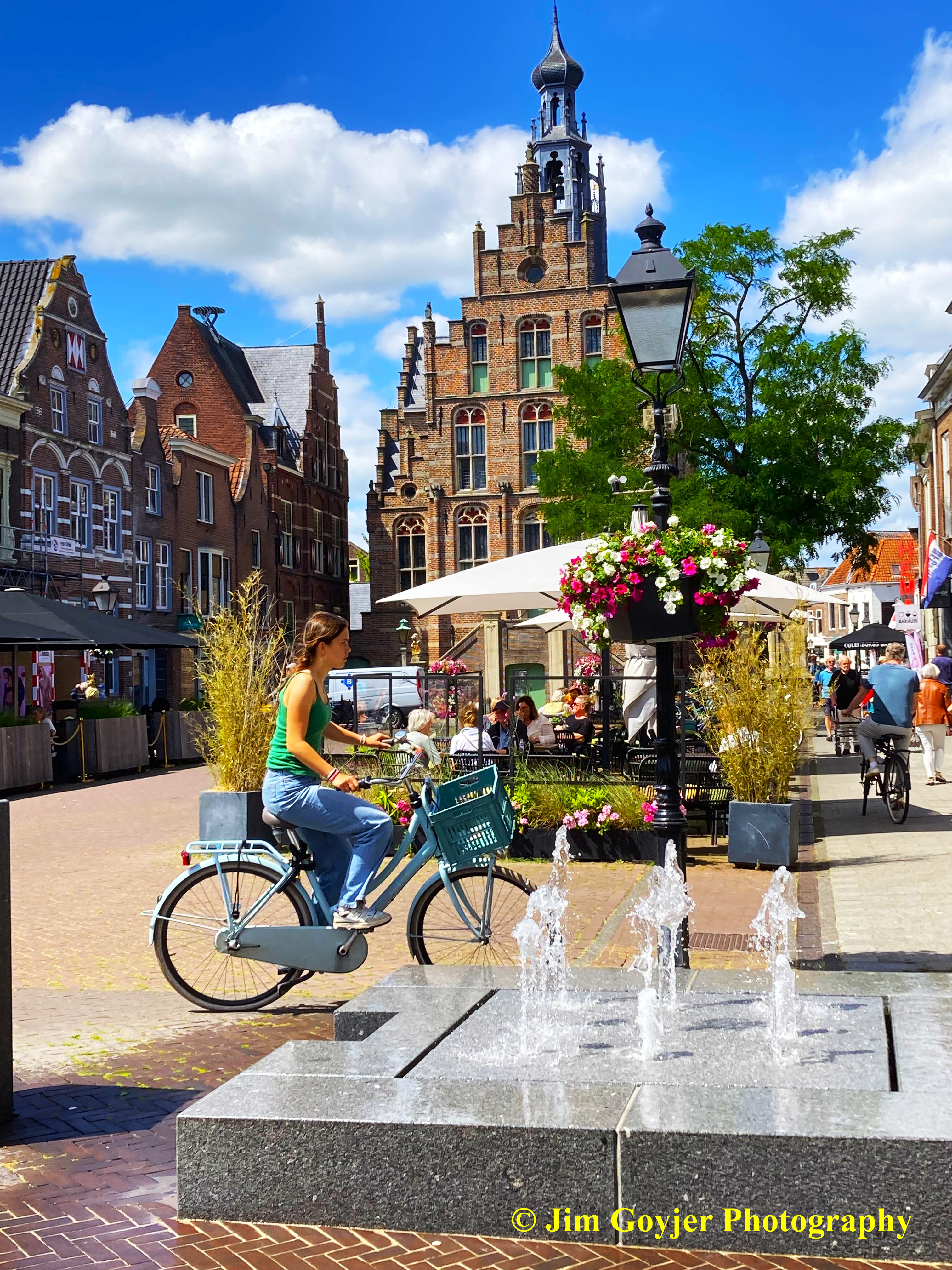
Culemborg is a small, fortified city in the heart of the Netherlands. It is located on the Lek River in the province of Gelderland. Walking through the city’s Binnenpoort (Inside Gate) into the main square is like walking into a storybook village. The rectangular shaped main square is lined on both sides with cafés and restaurants with outdoor seating, boutiques, local businesses and services, an ice cream parlor, a church, several large freestanding pots containing a variety of colorful flowers, a couple of fountains spouting water upward from shiny smooth stone platforms. And standing in the middle of the square is one of the city’s five 18th century water pumps. This picturesque historic old-town square has the feel of a bygone Golden Age defined by peace, harmony, stability, and prosperity. But it was not always that way.
Culemborg has had its ups and downs, like many towns and cities throughout the Netherlands. It has had its share of rulers, despots, devastating fires, floods, a plague, invasions, occupations and of course, the Protestant Reformation. Phew! Those forces were unable to keep a good town down.
In Roman times, there were some settlements near present-day Culemborg of “fighting, rough redheads.” Roman historian Tacitus called these ruffians “Batavians.” They were an ancient Germanic tribe living along the Rhine-Maas River delta that today crosses the Netherlands and Germany. According to Tacitus, they had wild blue eyes, a strong build, wore animal skin capes adorned with souvenir pins, and their hair was piled high in a bun, like a raisin bun, or a ‘krentenboll’ in Dutch.
Five hundred years later, around 800, Culemborg was established on the Lek River mudflats by farmers and handymen and women who traded among themselves. As the hamlet grew, merchants from elsewhere took notice and established a trading post that included craftsmen and craftswomen who were tailors, furniture makers, blacksmiths, saddle makers, shoemakers, bakers, stonemasons and baristas.
As the hamlet gained some importance, it was time to build a castle. In 1280, Culemborg’s feudal lord built a large knights’ hall for meetings, parties, weddings, funerals, and discos. A square tower was added in 1360 and a keep, surrounded with thick stone walls, in 1377. The keep was the fortified place of last resort in case of a siege by jealous neighbors.

In 1318, the village became large enough to obtain city rights that enabled the town to collect tolls and taxes on such items as beer, wine, and grain, which were lucrative. City rights also dictated rules on administration, jurisdiction, criminal law, tax law, and personal and family law. And it detailed provisions to establish order: a fine for throwing a drink in another person’s face, for fighting and drawing blood, or with fists. Two-thirds of the proceeds from the fines went to the lord, of course, and one third to the city. But more important, fines could be levied, willy-nilly, by a bailiff for more income. Duties were imposed on anyone who wanted to start a casino, a café or a McDonald’s.
The coup de grâce was the right of asylum, by which it gained a dubious reputation. With city rights, it was entitled to be a so-called ‘Vrijstad’ (free city). This allowed people to flee to Culemborg from other cities to evade their creditors, such as in the case of bankruptcies. Creditors were not permitted to enter the city. In Amsterdam, the saying ‘Naar Culemborg gaan’ (Going to Culemborg) became synonymous with going bankrupt. “Free” did not mean that criminals could trump the justice system. They were still held accountable.
As the town grew, merchants banded together to protect themselves from bandits by establishing guilds. Not to be overshadowed, craftsmen started guilds to protect and control their trades. These early trade unions enabled them to certify the proficiency of the workers. In Culemborg guilds were formed for bakers, weavers, blacksmiths, brewers, stonemasons, shoemakers, carters, woodworkers, armorers, and comedians or court jesters. Anyone who wanted to be a merchant or a craftsman had to become a member of a guild. If not, they would send out “knuckles the enforcer.”
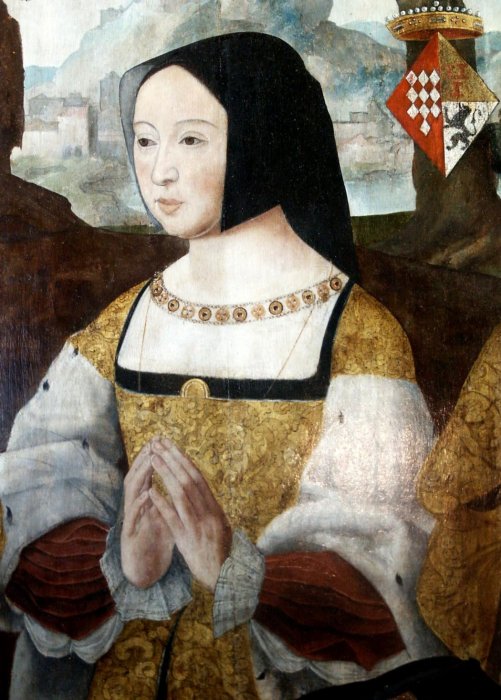
From 1341, Culemborg and a few other towns in the vicinity were owned and ruled by a succession of lords and ladies. The last sovereign of Culemborg was Elisabeth van Culemborg, nicknamed ‘Vrouw Elisabeth’ (Lady Elizabeth). She outlasted two husbands and ruled Culemborg from 1504 until her death in 1555 at the age of 80. She was a staunch Catholic and vehemently opposed the Protestant reformation. She was known for appreciating the arts and architecture and for her charitable work. She founded an almshouse for old men and women. She also gave the money for the construction of the town hall and the tower of the St. John’s Church. After her death, she left a large part of her fortune and the lands to the “righteous poor,” administered by the often “unrighteous” church and city council.

Shortly before Elizabeth’s demise, Holy Roman Emperor Charles V, who was Emperor of most of Europe at the time, as pontificated by the pope, elevated her domain into a county. After her death, the rulers of the county bounced around from one of Elisabeth’s family members to another for a few hundred years. It was a game of Pedigree Musical Chairs.
The Elisabeth Weeshuis (orphanage) built in 1560 was the first purpose-built orphanage in The Netherlands, thanks to Lady Elisabeth. Orphanages were usually established in existing houses. For almost four hundred years, many orphans found shelter in the Weeshuis. Today, the building houses a museum, brasserie, Library, and a People’s University.
Despite the succession of overlords, Culemborg grew into a large and prominent market town. In the 17th and 18th centuries, trade and industry provided work for hundreds of citizens. Culemborg also benefited from tolls on shippers using the Rhine River until about 1640, when tolling was abolished. Traders found ways to elude the tollmen. These tax dodgers had good lobbyists.

Meanwhile, back at the castle. Between 1480 and 1504, extensive expansions took place. The castle consisted of a large banquet hall, several defensive towers, a walled-in inner courtyard, and gardens with tree lined paths. Elizabeth lived comfortably in the fortress until her death. Her second cousin, Floris van Pallandt, lived with her because his father died when he was young, and his mother was declared insane. Since she had no children, Floris became Elizabeth’s legal successor. Emperor Charles appointed him Count of Culemborg right after her death.

Floris also inherited the Culemborg Castle, but he preferred to stay with his friends in Brussels, where he bought a palace in the city’s Sablon neighborhood where the hoity-toity lived. Although raised a Catholic, Floris converted to Protestantism in 1566, defying Charles and his son Phillip II who ruled the Netherlands at the time. He even set aside a Protestant prayer room in the castle, much to the chagrin of his wife, who remained a Catholic.
You could say that Brussels was the birthplace of the Dutch Revolt, also known as the Eighty Years’ War (1568–1648). Floris’ palace became the meeting place of the Eedverbond der Nobles (Compromise of Nobles). This was a group of rebel noblemen, some Catholic, that opposed the ruthless inquisition imposed by Phillip. Although Phillip professed to do God’s work, at times the popes found it difficult to distinguish between his service to God and his service to himself. Even Phil’s Catholic allies found it difficult to distinguish between the two.
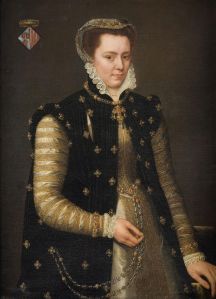
Phillip lived in Spain. He visited the Netherlands once and hated the cold as much as Protestants, so he appointed his half-sister, Charles V’s illegitimate daughter, Margaret of Parma, Governor General of the Dutch Republic. The Republic consisted of seven united provinces of the Netherlands that included present day Belgium and Luxembourg. Philip continued his father’s strict religious policy that Margaret had to enforce from her residence in Brussels. The rebellious nobles hand-delivered to her a petition “to cool it” with the crackdown. She made some concessions that didn’t sit well with Phil.
When the rebellious Calvinists started destroying Catholic churches’ idols, Phillip sent troops to restore order under the command of the Grand Duke of Alba nicknamed “Iron Duke.” Margaret resigned and took off for Italy, where she lived most of her life anyway. The noblemen attached their fates to William of Orange who led the Dutch Revolt against the Spanish. The instigating nobles became known as “Beggars” (Geuzen), the guerrilla, privateering “shock troops” of the Dutch Republic.
In 1567 Alba established the Tribunal de los Tumultos (Council of Troubles) to be known as the “Council of Blood,” which led to the conviction of thousands, including several noble Geuzens. Floris fled to Germany, where he had some property. In spite, Alba destroyed his city castle. Alba had many military successes initially in the War, but he failed to extinguish the Dutch rebellion.

After the Spanish were ousted, French King Louis XIV thought this was a terrific opportunity to invade the Netherlands, since the Dutch were tired of war and its economy was in the doldrums. Louis had delusions of grandeur. He was a monarch who viewed himself as God’s rep on earth. He also called himself the “sun king,” believing that his power as king, and the sun’s power were equal. And like the sun, he could do anything he desired. Holy Helios!
To “make France great again,” Louis started invading other countries. He cared less about the French people. He sought glory for himself and his country through military successes and by expanding France’s footprint with foot soldiers. In 1672 his troops invaded the Netherlands, with the help of the British navy. That was not great for the Dutch. He also had his eyes on Greenland, but the Netherlands was easier to march into.
After England realized that the French were worse than the Dutch, it switched sides and with the support of a few other countries, who didn’t like Louis either, the French left the Netherlands in 1673. The 5,000 soldiers that had occupied Culemborg Castle set it on fire and left it in bad shape. The current count moved his residence to a former monastery in the city center. It was safer since the castle was built outside the protection of the city gates and walls. It was a castaway castle.
The Franco-Dutch War officially ended in 1678 with the Dutch Republic intact, at least for a little while. Louis died in 1715, at age 77, from gangrene associated with a leg infection. In the end Louis’ “make France great again” didn’t have a leg to stand on.
The Netherlands’ off-and-on wars with Spain, France and England left Culemborg in financial straits. In 1720, the then Count of Culemborg decided to sell the County of Culemborg with all its city rights to another county for one million florins. (about €57 million or $60 million today). When the Prince of Orange Nassau William V was appointed leader, Stadholder (Dutch head of state), of the republic in 1747, it was decided to transfer the County of Culemborg to him. The republic abolished high taxes, which made the merchants of Culemborg very happy and appreciative.
The Dutch were regularly involved in some war within and outside of the Netherlands. Reliable weapons, mainly rifles and pistols, were essential. The imported weaponry from the city of Liege, 200 km away (124 miles) was cheap and inferior, and delivery was not reliable. William, who was head of the armed forces and owned the town of Culemborg, decided to build a munitions factory on the spot of the former Culemborg Castle. It made quality weapons, but they were expensive. Since soldiers were permitted to buy their own weapons, many opted for the cheaper imported firearms. In 1812, the French Emperor Napoleon Bonaparte put an end to Culemborg’s first real factory after his military invaded the Netherlands in 1794. He preferred French made arms.

Culemborg lost its independence during the French occupation, when the Dutch Republic was changed by Napoleon into a modern unitary state called the Batavian Republic (1795-1806). Since a unitary state is a country governed by a central supreme authority, Culemborg was now accountable to Napoleon’s cohorts.
The Batavian Republic and Napoleon didn’t see eye-to-eye regarding the governance of the Netherlands. Napoleon was a control freak. He did away with the Republic and declared the Netherlands a Kingdom, installing his brother, Louis II, as its king in 1806. When Louis did not perform to Napoleon’s expectations, after four years, Napoleon took the Kingdom away from him and just annexed the Netherlands to France. “Vive La Hollandais.”
The Netherlands regained its independence in 1813, after Napoleon lost his empire to an alliance of more than seven countries that defeated his army at Waterloo. He and his army were sent back to France. There, the French legislature turned against him. He tried to flee to the United States, but the freeways were clogged, so he was forced to surrender to the British who sent him into exile to the island of St. Helena where he died at the age of 51 from arsenic poisoning, allegedly. Free of the French, the first Constitution for the Kingdom of the Netherlands was established in 1814.

During the 19th century, Culemborg, with a population of around 6,000, was doing well economically. The following industries were humming along: it had a ribbon weaving mill, and it manufactured mustard, soap, guns, glass bottles, clothing, furniture, bricks, cigars and distilled jenever (gin). Many items were shipped around the world, including the US. The economy boosted when the railroad arrived in 1868. A railway bridge was built over the river Lek which was the longest bridge in Europe at the time.
Culemborg had a vibrant Jewish community. The first Jews arrived about 1665. In 1744, a butcher became the first Jew to be a fully vested kosher citizen of Culemborg. Soon after, a number of Jewish merchants came to Culemborg from various places in Europe and were also granted citizenship. They were shopkeepers, tailors, vendors, merchants, and goldsmiths. By the 1760s, the Jews of Culemborg had formed a community. They built the first synagogue in 1791 and replaced it with a newer one in 1868, at the same time as the railroad. That was progress.
During World War I (1914 – 1918), ordinary life continued, since the Netherlands was a neutral country. As the war continued, particularly the poor suffered from a lack of work, food, clothing and fuel. To support them, the ‘Royal National Support Committee 1914’ was established with local sub-branches. Culemborg was divided into eleven districts, in which three people were responsible for caring for the needy and for collecting funds. Wealthy citizens gave money and donations in kind, such as potatoes, goat’s milk, wheat, bread and coke – not the cola kind.
After the war came the Spanish flu and a recession that caused some companies to close. The gin distillery and glass factory, which were mainly dependent on exports, came to a standstill. The steam driven tram connecting surrounding communities did not survive due to higher fuel prices and a shortage of coal. Other industries survived, such as the furniture makers. Tables, chairs and cupboards were still essential.
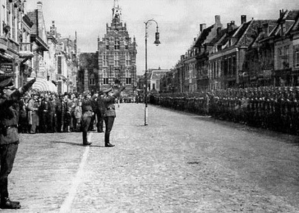
Then the Germans invaded the Netherlands on May 10, 1940. The New Dutch Waterline was useless against a modern military force. There was heavy fighting near Culemborg, but the city was spared from being on the frontline. Because of its geographical location, the sky above became an aerial freeway of bombers and fighters, first the Germans then the Allies. Throughout most of the war, Culemborg’s citizens were bombarded more by airplane noise than by bombs. Courageous residents stepped up and offered shelter to persecuted fellow citizens, Jews, allied pilots, students, resistance fighters and young men who were conscripted to go to Germany for forced labor. They all sought a safe haven.
During the occupation, most of the Jewish citizens were deported and murdered in the Nazi death camps. About ten Jews went into hiding and survived. The synagogue was used as a stable by the Germans. After the war the synagogue was sold in 1947. In 1950, the former synagogue was consecrated as a Reformed church. The building was completely restored in 1983. In respect, a memorial tile dedicated to the Jews who died in the war was integrated into the pavement in front of the former synagogue.
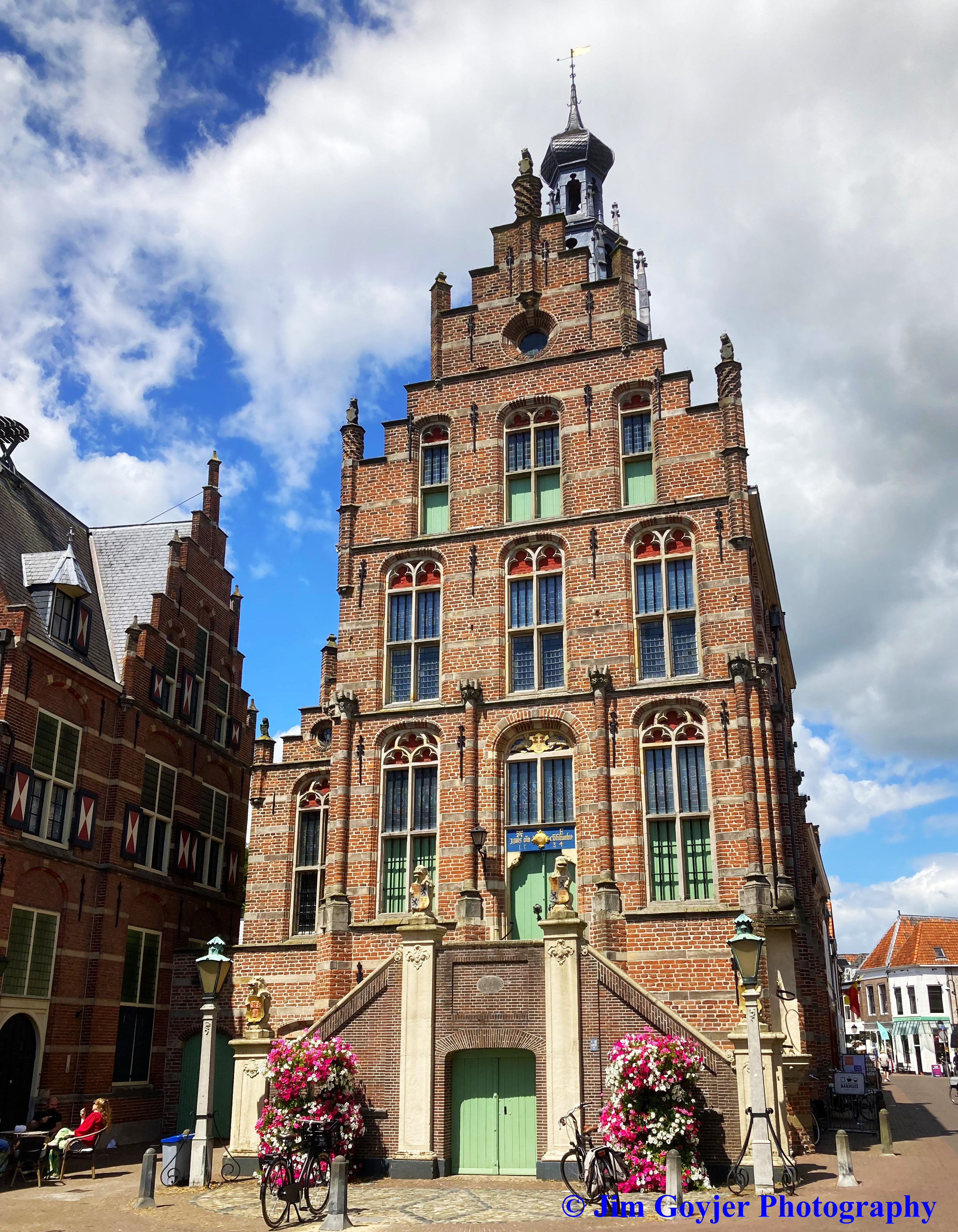
Today, as you wander around the town’s Disneyesque main square, you will see the imposing and tall city hall built in 1534. There are no windows on the street level, only shutters. Behind them was the courtroom, where trials were held. They had to be public for everyone to hear and see the verdict. In front of the hall is a blue stone where convicted criminals were beheaded. Those convicted of minor offenses were handtied, ridiculed, and humiliated at the corner of the town hall on a pillory, a wooden framework with holes for the head and hands.
Now, Culemborg’s most beautiful monument is a tourist information center. It is also used for receptions, weddings and birthdays.
(Featured Photo Courtesy: DPG Media B.V.)




 Jim And Nanci Travels