

By Jim Goyjer (15 min read)
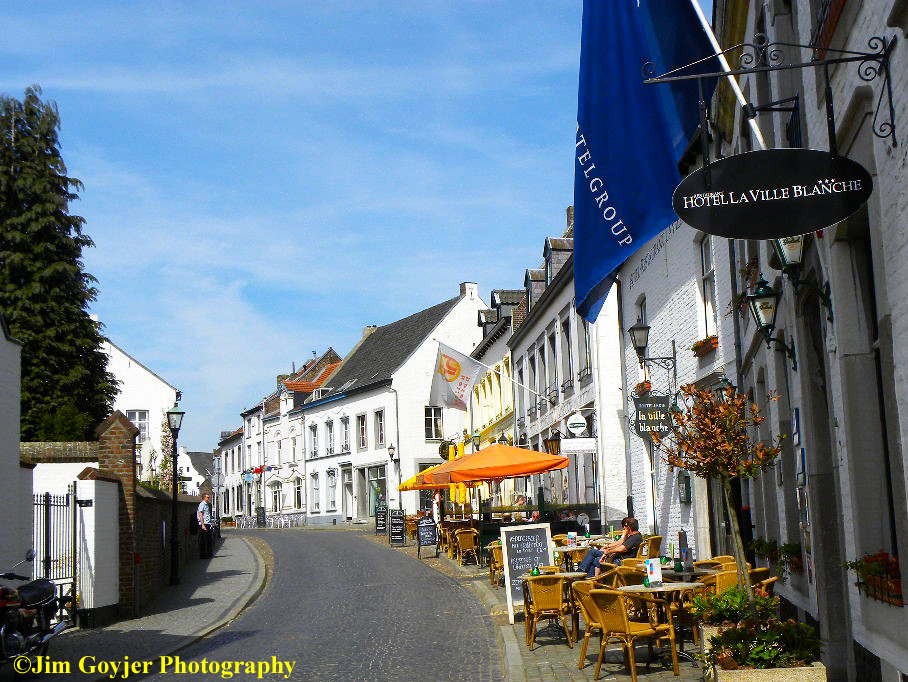
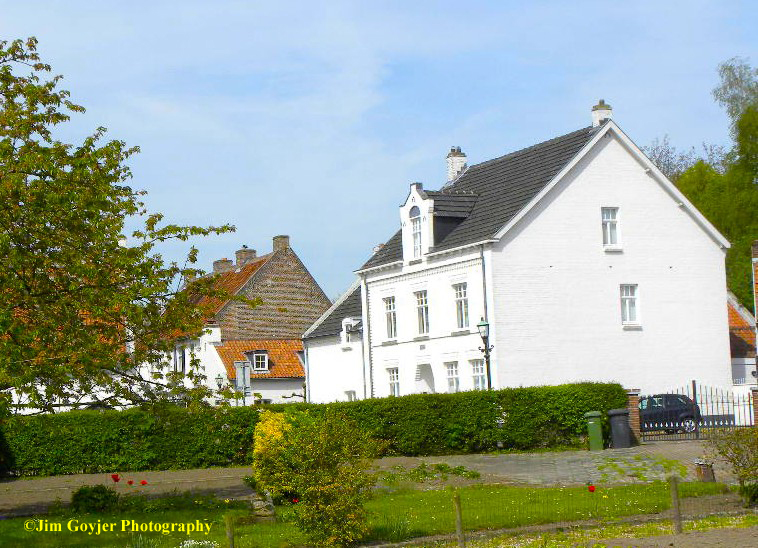
The village of Thorn, population 2,460, looks quaint and tranquil today with its cute white houses and buildings. Known as “witte stadje “(white town), it has a thorny past and an elitist pedigree. Located in the province of Limburg, a stone’s throw from Belgium, the Thorn Abbey was highly regarded in the Holy Roman Empire for centuries for its independence and for its powerful women. The Abbey was a medieval tax haven ruled by wealthy, single, noblewomen who were thought to have been a group of religious nuns, dedicated to an ascetic, religious way of life and helping the poor. Not quite. They were not like the nuns in The Sound of Music.
The area around Thorn was mostly marshland for millions of years. In the 4th century that did not stop the Romans from building a road that ran through the soggy fields along the Maas River from Maastricht in the south to Nijmegen in the north, the two oldest cities in the Netherlands. Halfway along 140 kilometer (87 miles) stretch, Thorn began as an abbey around 992 founded by Count Ansfried and his wife Hereswint (also known as Hilsondis) for their daughter Benedicta, who became the first abbess, or head nun, of the abbey.
The abbey’s abbess followed, loosely, the Benedictine order established in Rome in the 6th century. Benedictines took three vows: stability, a simple monastic way of life, and obedience to God. Unlike devout Benedictine nuns, these Thorn canonesses were not bound by strict monastic vows, because they were privileged nobles. The Benedictine’s adherence to poverty and chastity didn’t apply. The Thorn Abbey followed the Benedicta order instead of the strict Benedictine order.
Eventually, Thorn Abbey had up to 20 ladies of noble birth. The female gentry brought with them money and all their earthy possessions. The abbey became an elitist ladies club. No poor women allowed. They accepted only young women whose parents and all the grandparents up to their great-great-grandparents, on both sides, were of noble birth, thus banning impoverished nobles and aristocrats. In theory, these canonesses were allowed to stay during the day in their homes and at night were required to sleep in the convent. Soon this rule was abandoned, and the ladies stayed in their comfortable homes 24/7, where they also kept servants. The abbess lived in a castle.
In 1007, Thorn Abbey was granted the right to charge market and customs duties by Holy Roman Emperor Henry II, also known as Saint Henry the Exuberant or Jolly Saint Henry. In the 12th century, the ladies broke away from the Benedictine religious order and became a free secular ladies’ abbey. They stated in a 1310 document that they were never part of that religious order. It was fake news they claimed.

“Imperial immediacy” was bestowed on the abbey in 1292 by King Adolf of Nassau who was King of everyone who lived within the Holy Roman Empire that included most of western and central Europe. The recognition of “imperial immediacy” turned this ordinary abbey it into an “imperial” abbey within the Holy Roman Empire. “Imperial immediacy,” rooted in German feudal law, allowed the abbey to be declared free from any local or regional authority. It would only be under the direct (‘immediate’) authority of the Emperor, and later under institutions of authority such as the Imperial Diet. The Diet was the deliberative body of the Holy Roman Empire that included rulers of the imperial estates and the abbess. The women jumped out of their habits for joy.
Now that the abbey had this imperial recognition and along with city rights it attained in the 13th century, this band of sisters was on a roll. The abbesses could now be called princesses. They formed their own government and became a sovereign principality and the smallest independent state in the Holy Roman Empire. The abbey with its powerful and wealthy women accrued a large amount of land, scattered in southern Netherlands, as well as chunks of Belgium and Germany. Within their realm the princesses were able to lease out the land to farmers and enjoy huge profits.
In 1310 these early feminists wrote to the Pope requesting that they change their attire to reflect their updated social standing. They simply wanted to get rid of their nunish outfits, which included a black tunic with a white wimple, and go haute couture. The bold request took until 1490 to be granted by a later Pope. After 180 years, it was claimed that the request went to the bottom of the in-box. With their new modern attire, they attracted suitors who had to be wealthy nobles. No riffraff.

The Treaty of Westphalia, signed in 1648, ended the Thirty Years’ War, a group of religious wars between the Catholics and Protestants that killed between 20%-30% of Germany’s population. Besides that, the treaty gave the abbey, under the “imperial immediacy” clause, more sovereignty. As an independent city-state, additional perks included the right to collect taxes and tolls, hold a market, mint coins, bear (not bare) arms, and conduct legal proceedings. They could also administer capital punishment, which was gruesome in those days. The choices were hanging, burning at the stake, beheading, drawn (have the intestines pulled out), quartered (body chopped into four pieces) or forced to eat a McDonald’s McRib.
During the peaceful years, the ambitious women and their followers brought prosperity to Thorn Abbey and the surrounding population. The land was farmed out to peasants who just paid rent on their leased property. No taxes were levied in Thorn, something that was unthinkable in the Middle Ages. Thorn was not without scandal, however. Piousness was not ingrained in these free-thinking women. In the 16th century the abbey had its own mint, but it turned out that they were falsifying the coins with a lower silver content than the standard, so the mint was quickly closed by the Emperor’s Treasury Department.
In the 17th century, when Spain occupied the Netherlands, the Spanish sought to restrict the privileges designated to Thorn Abbey. The independent band of women resisted these attempts successfully. They were not about to have their rights overturned by a cadre of macho Spaniards.
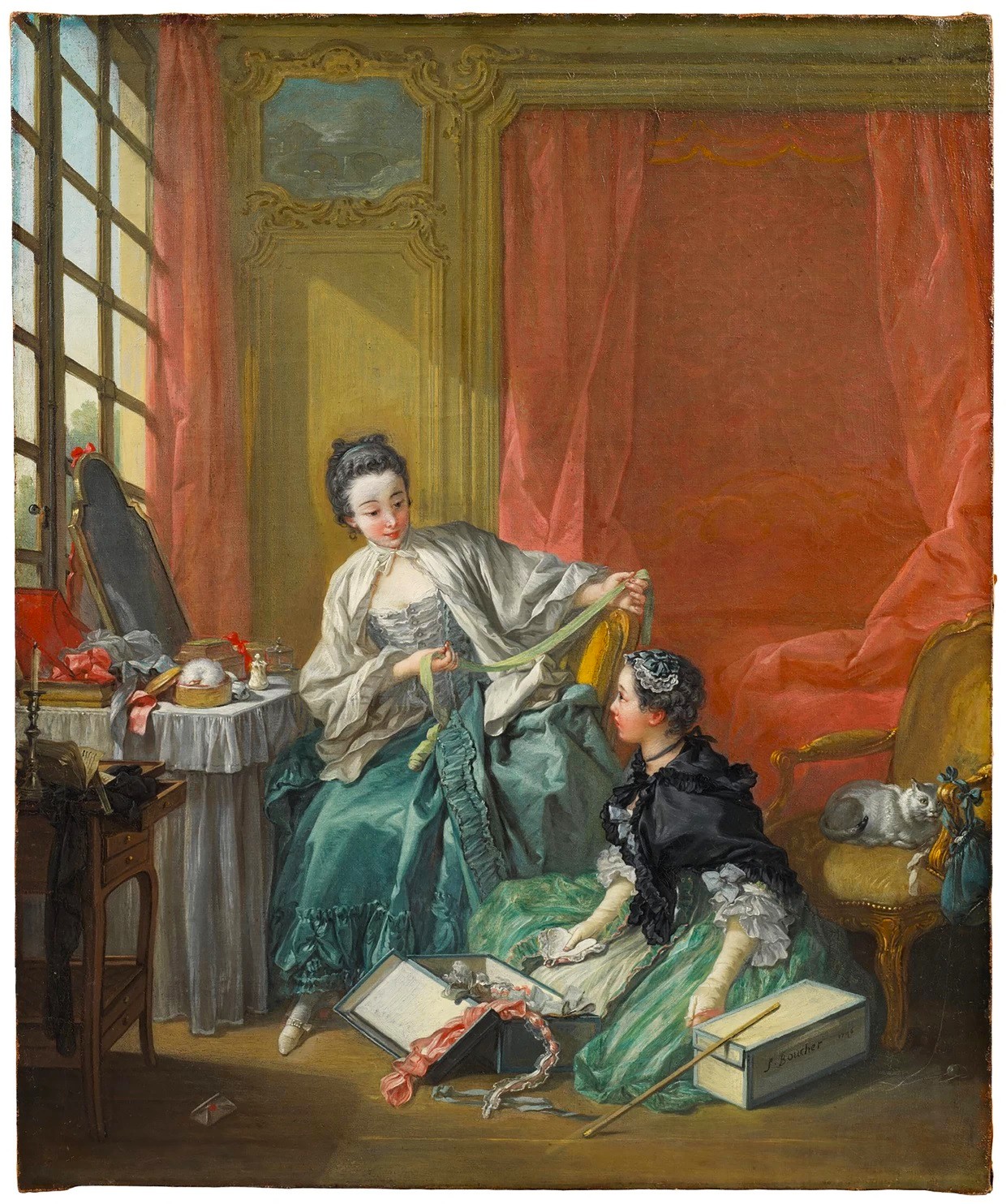
According to Dutch historian Joost Welten in his book, De vergeten prinsessen van Thorn (1700-1794), “these women lived in great luxury, were self-aware and enjoyed life to the fullest. Their life in Thorn was comparable to court life in Vienna and Versailles. They spoke excellent French, only wanted a man of noble standing, wore dresses in the latest Parisian fashion, ate gourmet dishes and, if possible, traveled by carriage. Thorn was all about the nobility, it had nothing to do with religion.” There is plenty of evidence that these free-spirited women were no Saint Teresas taking care of the poor. One Abbess-Princess contracted venereal disease after some sexual exploits and died. The last Abbess-Princess spent much of her time remodeling and decorating her palace in Thorn. Life was good until the French arrived
When the French invaded the Netherlands, it ruined the comfortable lifestyles of the princesses of the Thorn Abbey. French Revolutionary troops captured the area in 1794, and the noble ladies quickly left town, scattering back to their ancestral estates. The French military did not appreciate the “la belle vie” (the good life) of these princesses, even though they spoke French. The revolutionary forces believed in “liberty, equality, fraternity,” which did not include affluence and rich people, especially women.

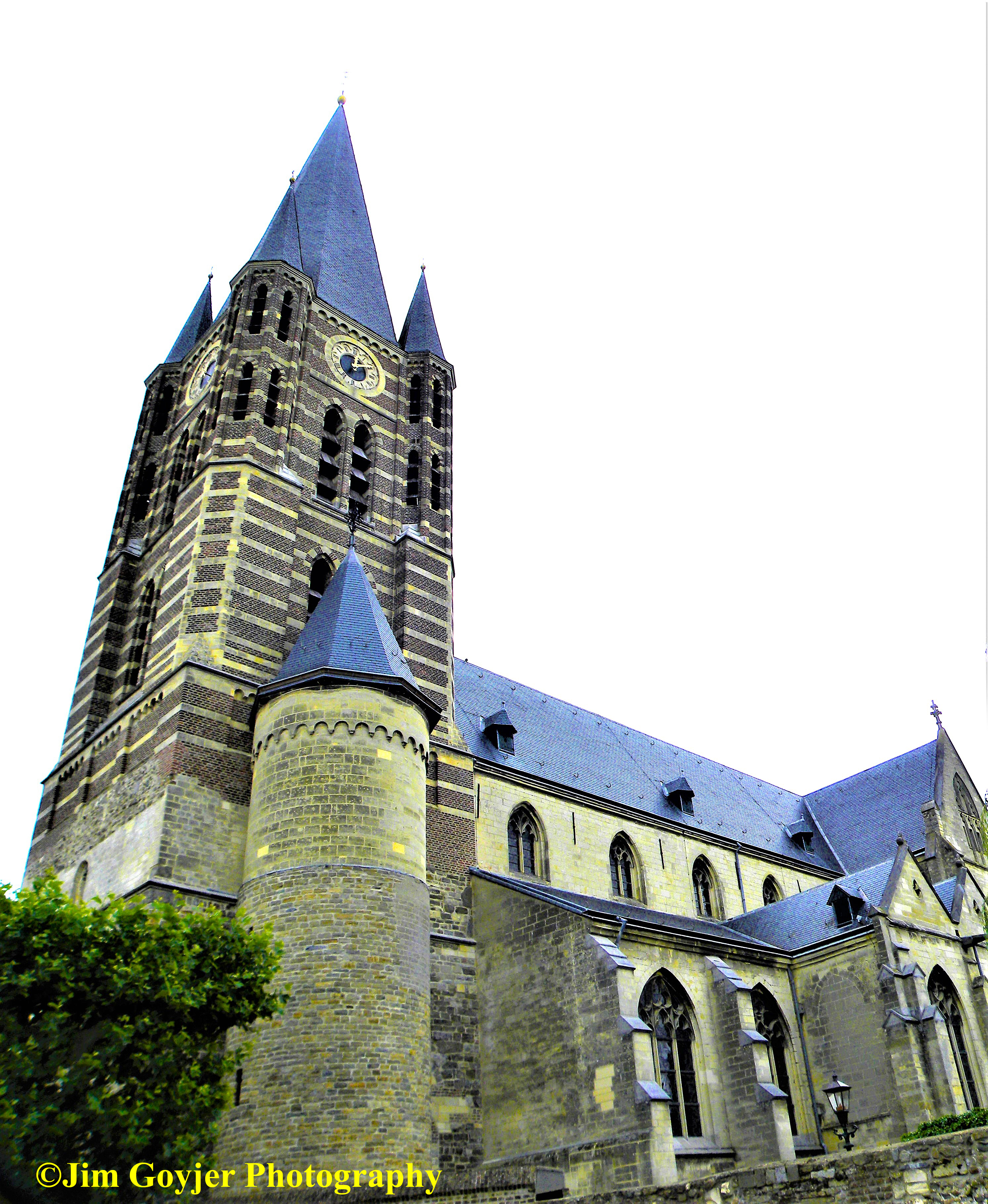
France officially annexed the region and most of the rest of the Netherlands in 1795. Thorn was ruined by the French occupation, by imposing taxes, which it never had before, and by demolishing most of the religious buildings that were part of the Abbey. They were anti-Christian but not anti-money. The tax haven turned into a real estate quagmire. The palace of the Abbess-Princess was put up for sale, but it was later demolished in the absence of a buyer, even though it was listed on Funda. Only the church, an outbuilding and a garden wall remained of the once immense complex.
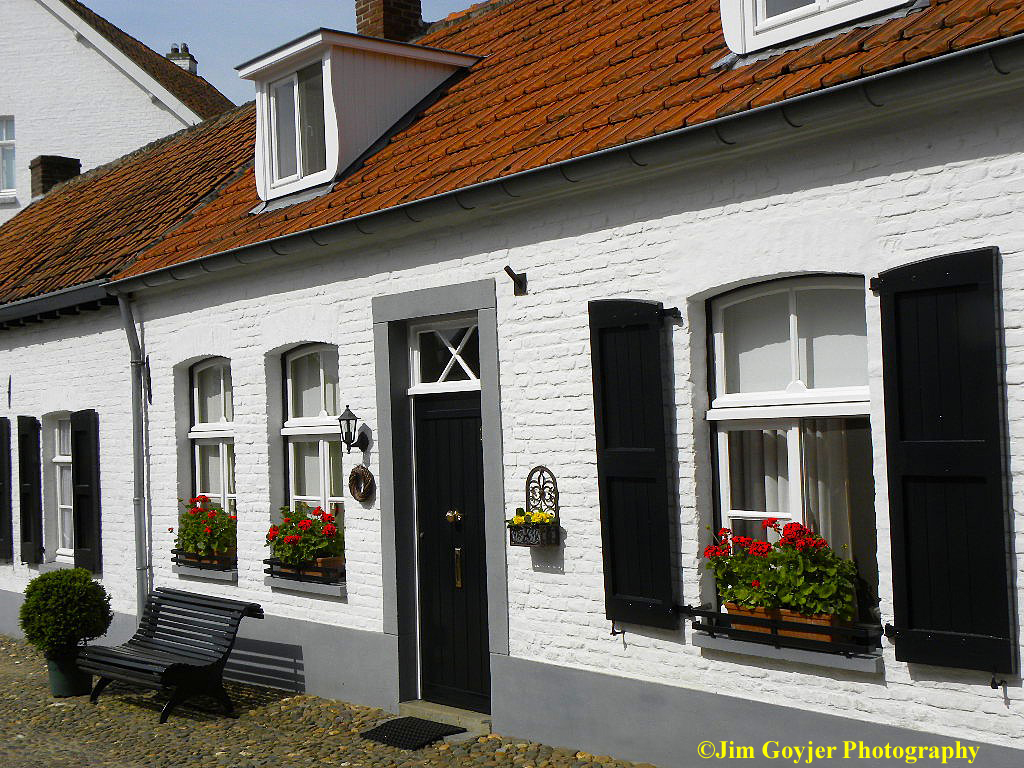
After the wealthy women departed with their belongings, a great number of poor people moved into town and started occupying the vacant homes and buildings that were left behind. These were large, expensive dwellings with lots of windows. The money hungry French introduced an ingenious tax based on the size of the windows. The poor could not afford to pay those taxes, so to lower their tax rate, they bricked up the windows. To hide traces of their remodeling, they whitewashed their houses. The white paint hid the difference between the old and new bricks. That is how Thorn came to be known as the “witte stadje” (white town).
During the Age of Enlightenment, also known as the Age of Reason, which dominated the world of ideas in Europe during the 17th and 18th centuries, the abbey officially closed in 1797, and the Holy Roman Empire ended in 1803. The French troops left in 1814. After Napoleon met his waterloo in 1815, the Congress of Vienna divvied up the empire and awarded the territory around former Thorn Abbey to the Kingdom of the United Netherlands.
When the province of Limburg was divided along religious lines in 1839, after the Belgian Revolution in 1830, Thorn stayed with the Netherlands, although many, including Dutch historians, had never heard of the place. This unique, tranquil town with its white houses, became popular with artists and tourists thereafter.

Brigade Pironbrug
In World War II, Thorn was liberated by the Piron Brigade on September 25, 1944. The Piron Brigade was a Belgian and Luxembourg military unit commanded by Belgian Jean-Baptiste Piron. Commonly known as the Piron Brigade, it saw action in Western Europe and participated in the Battle of Normandy, the Liberation of Belgium, and the liberation of the province of Limburg during 1944-1945. A total of 25 Piron brigade soldiers died during the battle to take Thorn. A monument and a bridge are dedicated in their honor. The monument honors the soldiers who died and small stone bridge marks the spot where they entered Thorn.
This little whitewashed town is worth a visit, especially because of the independent, influential women who lived here for so many centuries. When the world always thought that women in the Middle Ages had positions as a wife, mother, peasant, artisan, and nun, they also held some important leadership roles, such as abbess. Many did not conform to the male dominated Feudal system of the day. Under the pretext of religion, many lived independent, self-motivated, liberated lives. This was centuries before the women’s lib movement of the 1960’s.
As you wander around the quaint, quiet streets, alleyways and squares lined with whitewashed buildings and houses, soak in that this place was once one of the most powerful little towns in Europe for almost 500 years ruled by a group of strong, independent women.




 Jim And Nanci Travels