

By Jim Goyjer
The provinces of Noord (North) Holland and Zuid (South) Holland would not exist today as provinces of the Netherlands if it was not for the village of De Rijp. It is the birthplace of the polders and of several noted residents, Jan Adriaanszoon Leeghwater, Jan Janszn Weltevree and my ancestor, Willem Pieterszoon Lakeman.

Before 1600 AD, De Rijp was a hamlet on an island called Schermereylandt (Schermer Island) in the northwest part of the Netherlands. It was surrounded by numerous lakes, rivers, marshland, peat and seawater. Schermer Island was formed in the Middle Ages, after numerous gigantic storms from the North Sea. Storm water pushed peat moss layers of soils from one place to another like checkers on a checkerboard. In the 1500s stable weather and earthen dikes allowed people to start farming and fishing in earnest.
The shifting topography opened access to the North Sea. De Rijp took advantage of the layout of the land and waterways and it became a prosperous seaport from processing and shipping fish, large and small. In the wake of the burgeoning herring and whaling industry, other ancillary business developed and grew such as shipbuilding, whale-oil refineries, sailcloth weaving, bakers, and candle stick makers. Hemp from the Baltic Sea region produced fishing nets and rope. New homes, warehouses and workshops were built at a rapid pace. By the late 17th century, the population increased to about 5000 inhabitants, more than today.
My maternal ancestor, Willem Pieterszoon Lakeman, was one of 20 shipowners in De Rijp. He established a ship leasing company that made him wealthy. Between 1648 and 1663, he leased ships to sea captains who ventured out into the open oceans, fishing for fortunes in herring and whales. In 1663, he notarized a will, leaving his estate, which contained two farms consisting of 37 hectares (97 acres), to his heirs. His ships were to be sold, but not the two farms. They were to be rented out with income going into the fund. I am one of around 600 heirs today who receives a small yearly stipend from the fund. Enough for a latte macchiato.

Whalers from De Rijp sailed regularly to Greenland and to Spitsbergen, an island north of Norway, nearly 3,000 kilometers (1,800 miles) due north at the Arctic Ocean. But mankind cannot live on herring, whale oil and seafood alone. Land was needed to grow crops and raise animals to add variety to the fishermen’s dinner tables. Food was also needed for the long sea voyages. Albert Hein and Lidl came a little later. The waterlogged area around De Rijp was not meant for farming. More land was needed around Schermer Island.
Enter Jan Adriaanszoon Leeghwater (1575 -1650), a writer, man of letters, architect, surveyor, windmill builder and hydraulic engineer. The nouveau riche merchants and shipowners wanted to protect “their” island and De Rijp from frequent floods. By building dikes and draining the lakes, they could bring new prosperity to their community. They looked no further than the town’s own Leeghwater who became the main force behind the reclamation of the Beemster polder, the first polder in the world created from a lake. Ironically, Leeghwater means “empty water” in English. Coincidence?

Funded by a few investors, the reclamation of the Beemster started in 1607, beginning with the building of strong dikes. Using 26 windmills to drain the lake, the reclamation was finished in 1612 and farmland was created. Leeghwater supervised the entire massive project. Because of his efforts, in 1999 the entire Beemster polder was added to the UNESCO world heritage list.
Between 1612 and 1635, three other polders were also created under Leeghwater’s supervision. Hence, Noord Holland, and later Zuid Holland, was created by the Dutch, not by some imaginary entity mentioned in a best seller. Land reclamation, using windmills, continued until the early part of the 19th century with the advent of steam engines. Steam appeared to be a more reliable energy source than wind.
On the night of January 6, 1654, four years after Leeghwater’s death, De Rijp was ravaged by a huge fire that reduced two-thirds of the village to ashes. A massive storm descended on the town along with a mighty wind. The blades of a hemp windmill turned so fast that the mill caught fire triggered by friction. Sparks of the burning hemp traveled sky high and blew toward the village, landing on the many wooden houses. The town hall, built and designed in 1630 by master builder Leeghwater, was miraculously spared but not the Grote Kerk (Big Church or Main Church).
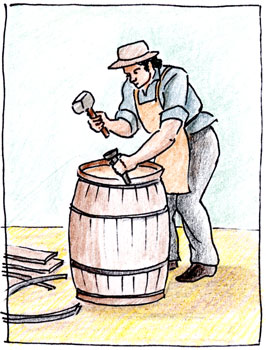
The fleet of seventy herring ships was undamaged by the fire. The haring trade enabled the town to rebuild the Dutch Reformed “Big” Church. When it was completed in 1655, various guilds such as the Coopers, guys who make wooden barrels that contain herring, and other towns of North Holland donated stained glass windows with their coats of arms. This group of 23 colorful stained-glass windows is deemed national monument, due to its history and grandeur. During the Second World War, the church windows were safely stored in various locations.
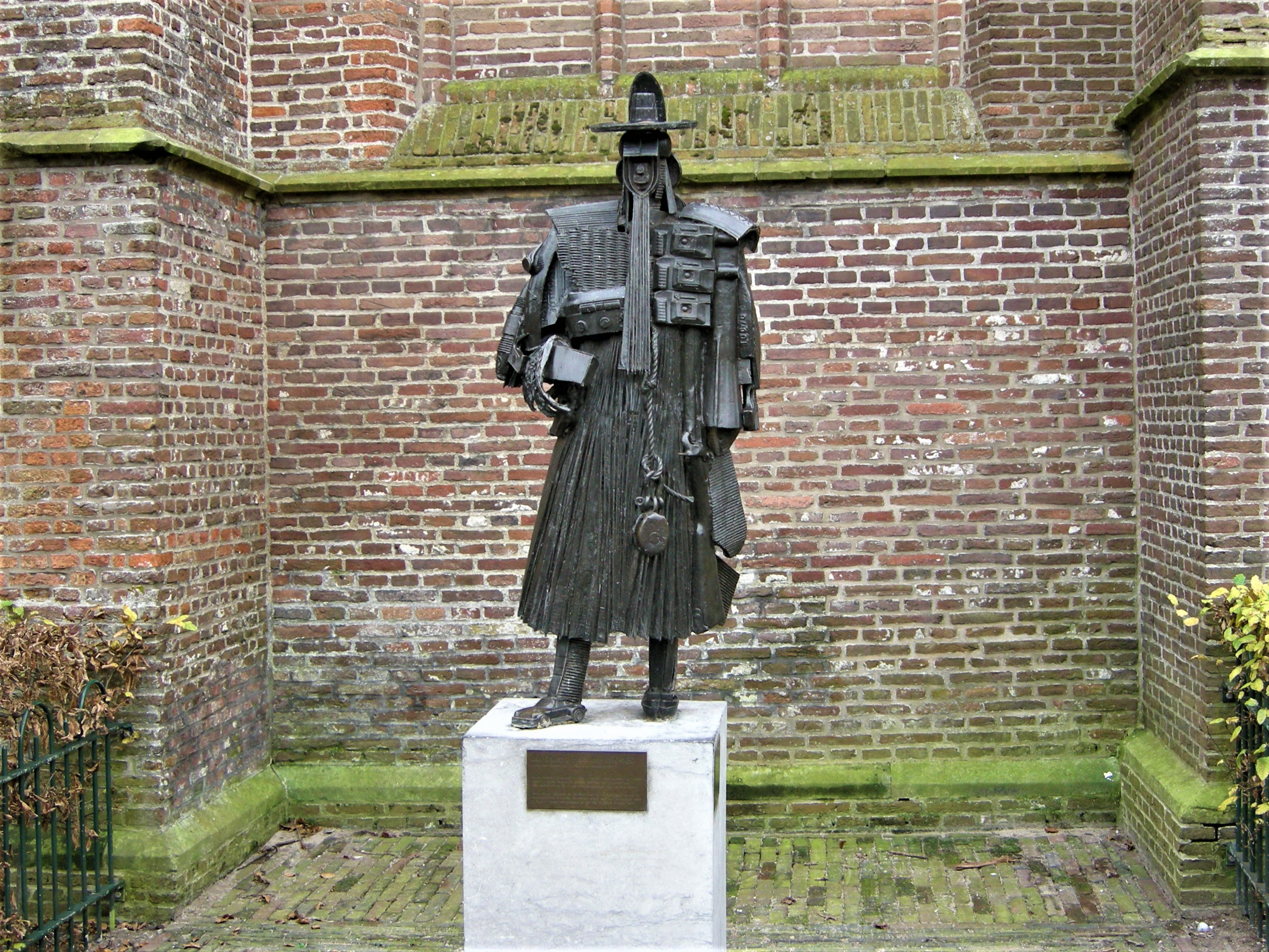
Besides my ancestor and Leeghwater, De Rijp had another famous citizen, Jan Janszn Weltevree. Born in De Rijp around 1595, he became the first European in Korea and ended up being an advisor to the Korean king of the Joseon Dynasty, Hyojong van Joseon. He signed on the ship ‘Hollandia’ and sailed on March 17, 1626 to Dutch East Indies. He ended up in Jakarta where he captained the ship “Ouwerkerck.” On July 16, 1627, Jan and his crew captured a large Chinese junk with its crew of 150 sailors.

The first known reference to junks was around 2800 BCE in China. It was not a piece of junk. From its humble beginnings, the Chinese junk became among the most powerful and easily maneuverable ships in the ancient world, because the ship featured a rudder mounted on its stern for steering. In the 13th century, Marco Polo wrote that one of these ships had 50 to 60 cabins onboard. By the 15th century, these well-built junks were said to be 400 feet long and 160 feet wide. A mega cruise ship for its time, without an indoor pool, fitness center, jacuzzi, theater and casino.
Jan and a few of his men went aboard the junk and set sail for Formosa, along with 70 captured Chinese sailors. Jan’s ship, the “Ouwerkerck,” reached safe harbor without Jan. After a fierce storm, Jan’s junk ended up on the shores of an island off Korea’s west coast during the reign of the Joseon Dynasty. At that time, the Joseon Dynasty enforced an isolation policy, so the captured privateers could not leave the country. What to do? Eventually, Jan took the Korean name of Pak Yǒn, married a Korean woman, with whom he had two children, and became an important government official. No one knows what happened to his fellow Dutchmen and when Jan died. The last person to see Jan alive was Hendrick Hamel, a bookkeeper born in Gorinchem, the Netherlands.

In 1653, while sailing to Japan on the ship “De Sperwer” (The Sparrowhawk), Hamel and thirty-five other crewmates survived a deadly shipwreck on another island off the coast of South Korea. After spending thirteen years in captivity in Seoul, Hamel and seven other crew members escaped to Japan. Later, Hamel became the first Westerner to provide a first-hand account of the Korean Joseon Dynasty. His account was a best-seller and Korea became known to the Europeans. The Koreans were so grateful for the exposure that centuries later the city of Yeosu, South-Korea, named a museum after him. During Hamel’s isolation, his Korean interpreter was Jan Janszn Weltevree.

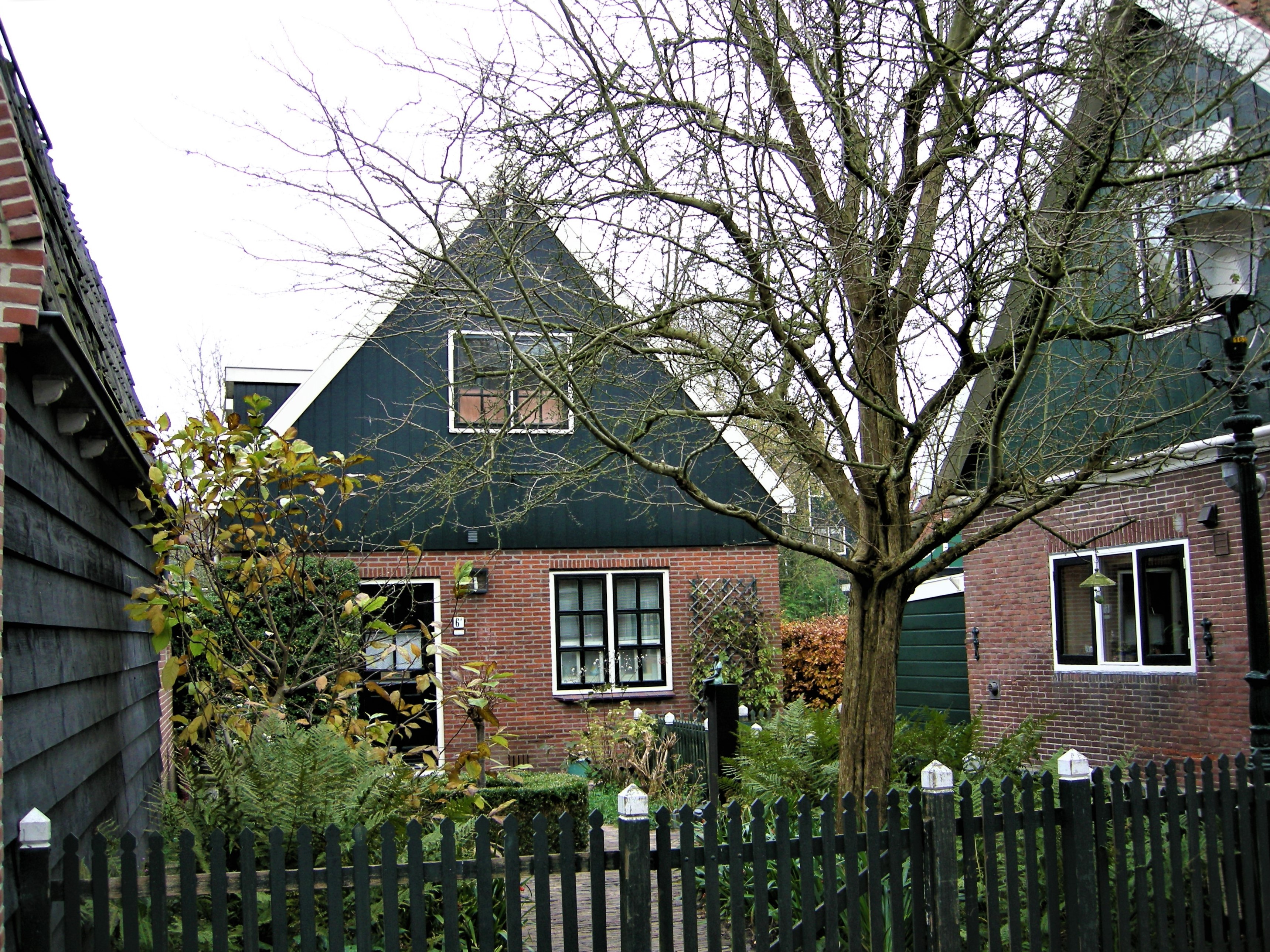
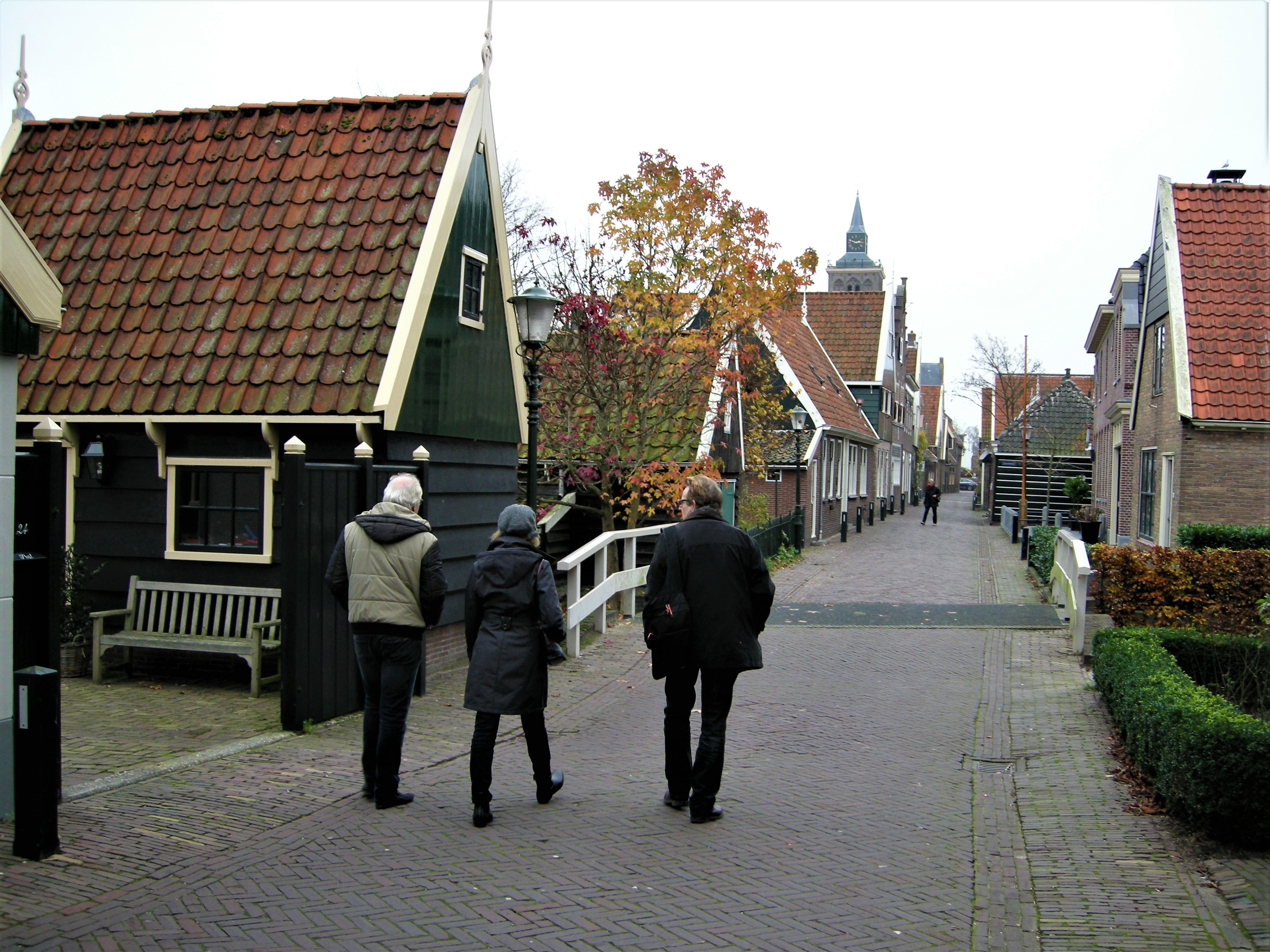
It’s worth spending a few hours in De Rijp. It’s a small town located between Alkmaar and Purmerend and has a population of around 4,000. On the national register of protected villages, it has 120 restored structures and 27 monuments. The center, covering a few blocks, is like stepping back into the 16th century. The Town Hall, built by Leeghwater in the Dutch Renaissance style, is a former weigh station, mayor’s office and courtroom. It is used today for weddings and other official proceedings. The building also houses De Rijp’s visitor’s center.

De Rijp’s coat of arms, embossed with two herrings, punctuates the façade of the Town Hall. After the town of Enkhuizen, about 40 kilometers (25 miles) northeast, the village of De Rijp was the most prominent commercial herring fishing port in North Holland in the 17th and 18th centuries. Because De Rijp was second, Enkhuizen has three crowned herrings in its coat of arms and De Rijp only two. The coat of arms was officially granted by Royal Decree on June 26, 1816, although it was certainly used around 1600, according to fishy archives.
De Rijp was occupied by the Germans during WWII. At St. Bonifatius Catholic church, built in the 1860s, are the graves of two Dutch resistance fighters from the War, who attempted to rescue two allied airmen that survived a plane crash. They were intercepted by the Nazis and were shot dead. Each year the event is commemorated at 20:00 (8:00 pm) on May 4th by the citizens of De Rijp.

The village was once the country’s most important herring and whaling port during the so-called Golden Age. Check out Museum Jan Boon-het Walhuis De Rijp and Museum In ‘t Houten Huis to be immersed in De Rijp’s significant place in world history. Across from the Town Hall is Restaurant Oudejans, also called Het Stadhuis van Amsterdam, which dates to 1660 and is soaked with history. Numerous buildings in the village center have been restored to their 17th century style.
De Rijp is ripe for a visit, the birthplace of Noord Holland and the birth of two of its most famous historical figures, Jan Adriaanszoon Leeghwater and Jan Janszn Weltevree, and I can’t forget the birth of my ancestor, Willem Pieterszoon Lakeman. The village is historic and charming. You don’t go there for the shopping, although it has a small shopping center, you go for there for the atmosphere.
Addendum: Some years ago, I attended a fundraising event for the Netherland-America Foundation in Los Angeles. At the event I happened to meet a man whose ancestor was Jan Adriaanszoon Leeghwater. My ancestor, the whaler, and his ancestor, the reclaimer, lived in the same village, De Rijp, at the same time. Today, one street in de Rijp is named for Leeghwater and one for Lakeman and the streets intersect each other. The two men must have intersected in the past too.



(Header Banner photo by the VVV De Rijp)
 Jim And Nanci Travels