
By Jim Goyjer (15 min read)
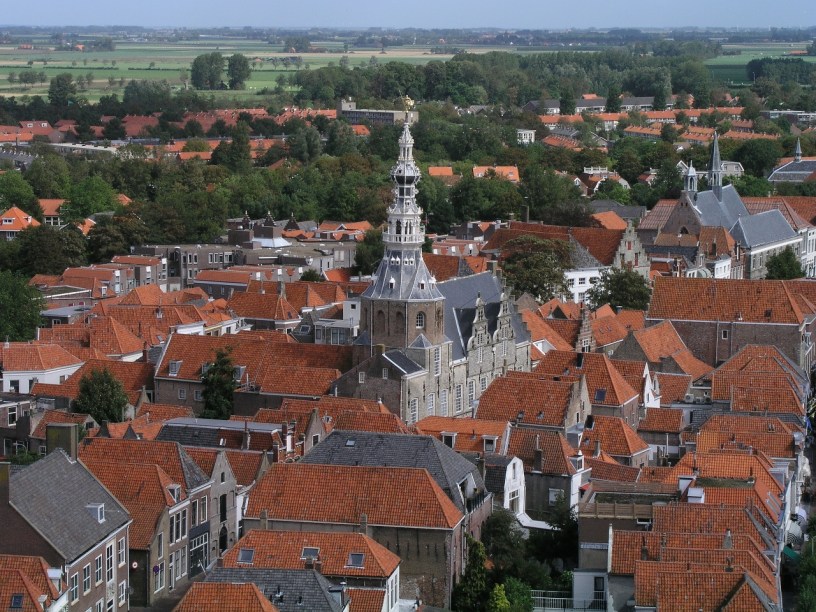
Zierikzee is a small port town located on the island of Schouwen-Duiveland in the southwestern Netherlands province of Zeeland. Zierikzee has a dynamic, storied history and a few questionable legends. Over the centuries resilient Zierikzee survived regional wars, Spanish and French occupations, numerous fires, a plague, a WWI Allied bomb attack, the WWII German occupation and a thousand-year-flood. There are 568 national monuments in and around the city center, which places Zierikzee in the top ten Dutch cities with the greatest number of monuments. Many city walls, gates, churches, towers and mills date from the 14th and 15th centuries. It is the most historically preserved town in the province of Zeeland in Southwest Netherlands.
Legend has it that Zierikzee was founded in 849 by a fellow called Ziringus or Zierik. Zierik was an explorer from Pannonia, an ancient Roman province around present day Hungary and Romania. Zierik is believed to have been a local ruler who established his settlement next to a creek called the Ee. So, Zierik and Ee became Zierikzee. It’s a stretch, I know. Zierik was thought to be the son of a King of the Huns called Lalalo who created the salt business and show business. We need to take this story of Lalalo and his son Zierik with a grain of salt. Archaeologists think that Zierikzee goes no further back than the 11th century, before vaudeville.
The more plausible story is that the sea deposited clay in the area creating a landscape of high-lying creek ridges with low-lying lakes in between. A hamlet of fishermen and sheep farmers settled along one of the creeks. The sea kept flooding the region in the 9th and 10th centuries. The hearty homesteaders had enough and started defending their small community against the sea by constructing earthen dams. One dam was built beside a tide mill to control the sea’s fluctuating currents. The mill was mentioned in 1220 and is the oldest reference of a watermill in the Netherlands.

The name Zierikzee appeared for the first time as Siricasha in an official document from 1156. The town obtained city rights in 1248, which gave it the privileges to chart its own economic destiny. It stimulated growth and by the end of the Middle Ages, Zierikzee had become a strategically important place in Zeeland and the surrounding area. It had more large ships anchored than any other town in Holland. Around 1400, the town was so important that it even had its own castle, Gravenhof, built to defend the city against invaders. It was also used by the aristocracy as a vacation retreat. The castle was demolished 300 years later due to disuse, neglect and no hot running water.
Ships sailed from Zierikzee to destinations around the world including Archangel, Saint Petersburg, Malaga and Genoa. Some set sail for the African west coast and the Caribbean. Unfortunately, many were involved in the slave trade. The city became so familiar overseas that gifts shops were selling “Visit Zierikzee” T-shirts and hats.
In 1735, a slave fund was established in the city to buy the freedom of captured Zierikzee sailors. In the 18th century, seized sailors were often enslaved by Barbary coast pirates operating along the coast of North Africa. The slave fund continued to exist, even after the Arab slave trade had ended in the 19th century. Following the flood disaster of 1953, the money from the Slave Fund was used to finance the construction of two new nursery schools. Nuchter decision.

As Zierikzee gained economic wealth under City Rights, religious orders moved in begging for a piece of that prosperity. In the 13th century, Western European Church history was called the “mendicant” (Latin: “begging”) movement. Monasteries sprung up occupied by Christian begging sects such as the Friars Minor and the Preachers. A mendicant was a monk who relied chiefly or exclusively on alms to survive. Until that time the monks in Europe toiled at their trades in their monasteries. They worked for a living, unlike the lazy next generation. Zierikzee pacified the preachy mendicancy monks and still prospered.
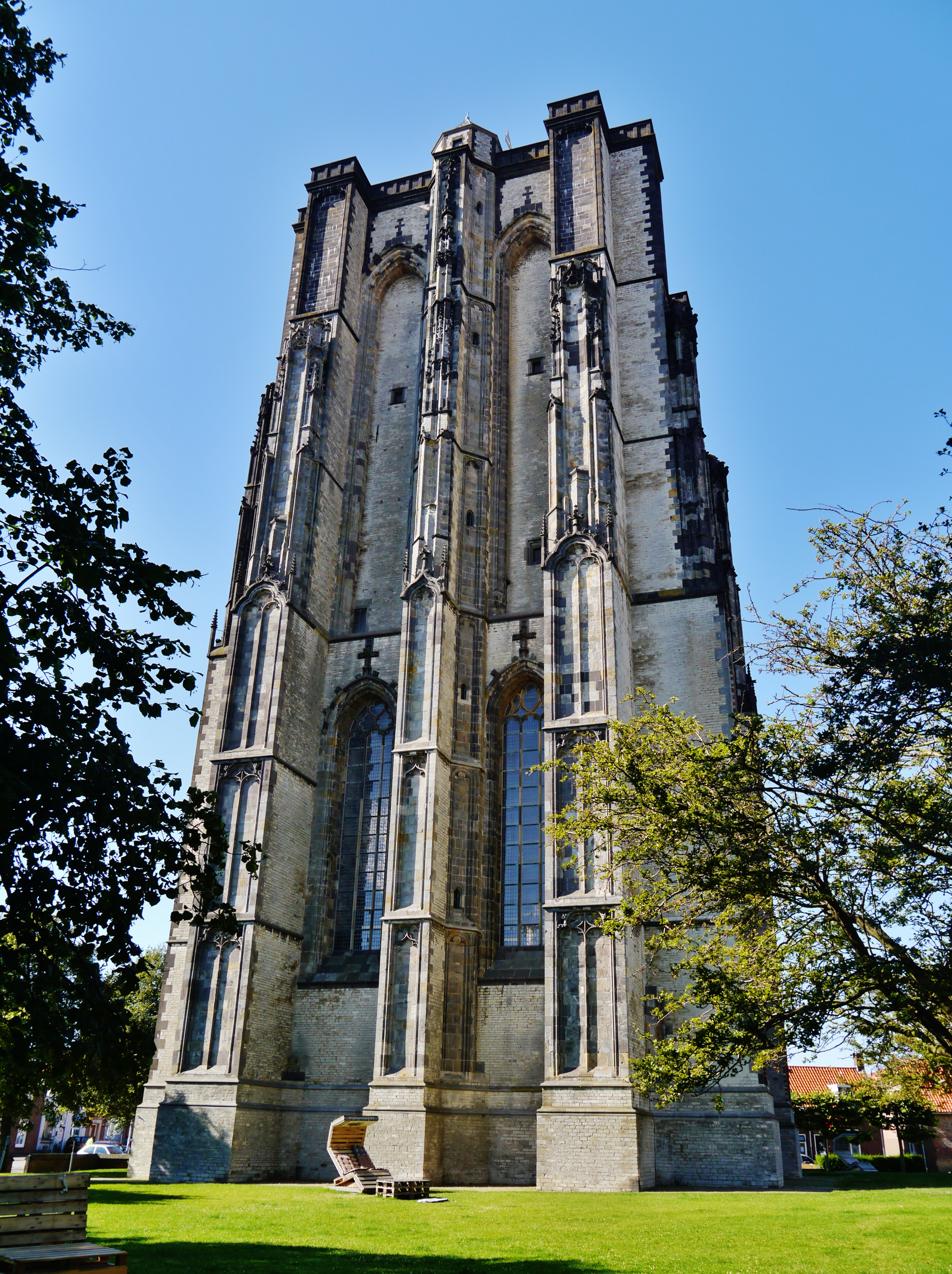
Zierikzee had six devastating fires from the 15th century to the 19th century. Some burned half the town. In 1466 a fire caused by lightning destroyed the largest church. The church began as a wooden structure in 950. During the 12th century it had morphed into a Holy Roman Basilica. Following the 1466 fire, a much bigger church was planned. It was to be larger and higher than all the other churches in the area to symbolize the town’s power and prestige. Zierikzee was flush with money at the time from trade and sea salt production. Work began on the church in the latter half of the 1400s and it took over 50 years to finish. This time it was built in the neo-gothic style, denotating a tall structure, supported by flying buttresses, reaching for the sky or to heaven.
The church was dedicated to Sint Lievens (Eng: Saint Livinus). This saint had a murky past. According to legend, he was born in 580 in Ireland (some say Scotland), the son of a Scottish noble and an Irish princess. He was ordained in Canterbury, England, evangelized in and around Flanders, Belgium, and martyred near Ghent in 657. Parishioners of Zierikzee were introduced to this saintly being in 1463 by a religious order in Ghent when the flock received a piece of the saint’s arm. Armed with his donated limb, the town went to work and named the church and the tower after the whole holy saint.
Commons (CC) license
In 1454 the church tower’s foundation was begun. It was called Sint-Lievensmonstertoren (Saint Livinus Monster Tower). The town’s elite demanded that it had to be high, really high. It was planned to be approximately 130 meters (426 feet) tall after completion. Dreams were dashed when prosperity declined, disasters and other setbacks struck the town. The builders got no higher than 50 meters (164 Feet) and construction stopped in 1510. Sint Lievens Kerk burned down in an inferno in 1832, but the tower survived. The neo-gothic church was replaced by a more modest neoclassic style church and renamed Nieuwe Kerk (New Church). Both the church and the tower can be visited today, although the monster tower is now called the Dikke Toren (Fat Tower).
During the Eighty Years’ War (1568-1648) for independence from Spain, Dutch Watergeuzens (Seafaring Rebels) occupied Zierikzee in August 1572 from the Spanish. The Geuzens was a nobility led Calvinist Dutch guerrilla and privateering force that started the Dutch revolt against Spanish rule. In September 1575, Spanish troops returned after a battle called the “Siege of Zierikzee.” Three attempts to break the siege by the Dutch navy failed. The Spanish prevailed, but not for long. Four months later the Spanish soldiers mutinied over promised salaries and late payments. They deserted and extorted money and goods from the town’s population before the looters high tailed it out of the town. The Protestants were back in control and the Dutch Republic was established. The Republic existed from 1579 to 1795. It was a confederation of seven provinces, including Zeeland, that had their own governments and were mostly independent.
Then came the turbulent 17th and 18th centuries. A plague killed off more than three quarters of the region’s livestock. The Dutch Republic was in decline. Holland got caught up in the wars between the French and the English, which caused an economic crisis. The conflict between the Catholics and the Protestants was a pain in the pulpit. The lingering rivalry between the two main political factions in Dutch society didn’t help. It diminished the strength and unity of the country. The two parties were the Staatsgezinden (Patriots or Progressives) that wanted a democratic government and a more equal society, inspired by the ideals of the Enlightenment, and the Prinsgezinden (Orangists or Royalists) that supported a monarchy.
This political rivalry in Dutch history spanned 20 years, of which three were under French occupation. Zierikzee supported the Patriots who embraced France’s motto of Liberty, Equality, and Fraternity. Those ideals didn’t benefit the town financially, however, during the French occupation. In the meantime, the English had occupied parts of Zeeland because of the Fourth English-Dutch War in the 1780s. After the French packed up their baguettes and left in 1813, as Napoleon was in retreat, 200 English redcoats ravaged the town. They hijacked Zierikzee’s ships and sailed into the sunset.
Zierikzee couldn’t get a break from this revolving door of foreign interlopers and raiders and from disasters. The town was in deep debt in the 19th century. It attempted to return to the glory days of prosperity by getting into the commercial fishing business. That didn’t work. The project was a failure because of disappointing catches, low prices, lack of bait and a shortage of skilled sailors, fishermen and migrants. In addition, one of the main waterways to the sea silted in.
The town went from international notoriety to just regional importance. In 1822, Zierikzee had two breweries, two tanneries, four co-incinerators, two rope makers, a soap factory, a salt refinery, a broom-making factory, a whale oil refinery, two gravel mills, two sawmills, a barley mill and four flour mills. These businesses were not enough to create a lot of wealth for the town. But it was a good thing in the long run. Other towns and cities that had more money destroyed most of their old buildings for new ones. Zierikzee couldn’t do that, it simply lacked the money. Hence, it kept its historic heart intact for today’s visitors to enjoy.

During the First World War, on April 30, 1917, a lost British pilot dropped six bombs on the Zierikzee, causing three casualties. The Netherlands was a neutral country. The pilot confused Zierikzee for Zeebrugge, Belgium, that was occupied by German troops belonging to Kaiser Wilhelm II who started the war. The Kaiser was a bellicose Trump-like character who wanted to be seen as a respected world leader but frequently undermined this effort by making thoughtless, alarming public statements without consulting his ministers. When Germany lost the war in 1918, Wilhelm abdicated and fled in exile to the Netherlands. Wilhelm was a distant cousin of the Netherland’s Queen Wilhelmina, who persuaded him not to invade her country in the war. She was family, after all.
In the Second World War, Schouwen-Duiveland was the only island in the province of Zeeland that remained under German occupation until May 1945 when the Nazis surrendered. In December 1944, the Germans declared their intent to deport all men in Zierikzee and on the island between the ages of 17 and 40 to labor camps. Aided by Allied undercover agents, the local resistance fighters stole all the public registers on the island. Though successful, ten local men were still captured and executed.
Beginning late in the 18th century a small group of Jews moved to Zierikzee. They held regular prayer meetings and established a Jewish cemetery. In 1809, to accommodate the town’s Jewish population, market day was held on Thursday instead of Saturday when Jews observe Shabbat, a day of rest. In 1825, the community consecrated a synagogue. Most local Jews were involved in trade or manufacturing. By the early 20th century many moved away to larger towns and cities. During WWII the remaining Jews of Zierikzee were taken and deported to Nazi concentration camps in Poland where they were murdered. Today, few Jewish families live in Zierikzee. The Jewish cemetery is maintained by the municipality. A monument dedicated to the memory of the deported and murdered Jews of Zierikzee stands not far from the cemetery.
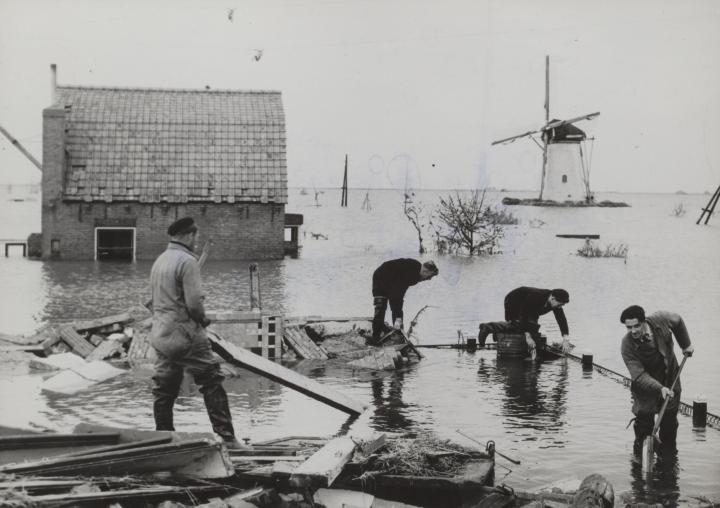
Zierikzee was severely damaged by the catastrophic one-in-a-thousand-year North Sea flood of 1953 that killed 1,800 Netherlanders. Houses collapsed and streets were continually flooded for several months. Twenty-four Zierikzee residents drowned. Most of the population had to evacuate. Great compassion was shown by other European communities. Zierikzee received help from the towns of St. Hilaire-du-Harcouet, France, and Hertfordshire and Hatfield, England, with which Zierikzee has maintained relationships. Since the flood, most of the town has been restored and beautified.
In 2015, Zierikzee’s last surviving defensive cannon, cast in 1552, was donated to the town by the British coastguard. The coastguard recovered it from a commercial diver in Kent, during a criminal investigation. The diver was charged with fraud relating to other Dutch cannons. The bronze minion cannon, which weighed one ton and was nine feet long, was transported back to Zierikzee on the Dutch Royal Navy minesweeper named Zierikzee. Coincidence? The minion cannon was the only one left in existence and was intended to be used for the town’s defenses.
Legend has it that the cannon was loaned to a ship in the Spanish Armada when the Spanish tried to invade England. The ship sunk off the English coast and since 1588 the cannon laid on the sea floor. The cannon finally found a permanent home in the Zierikzee city museum.
The oldest house in Zierikzee is called De Haan or De Haene House, formerly known as the Templar’s House. The building dates from the first half of the 14th century. It was originally the house of a merchant. Why it was once called the Templar’s House, no one knows. Legend has it that a Knight Templar was killed there in 1312. Marketers will do and say anything to attract tourists.

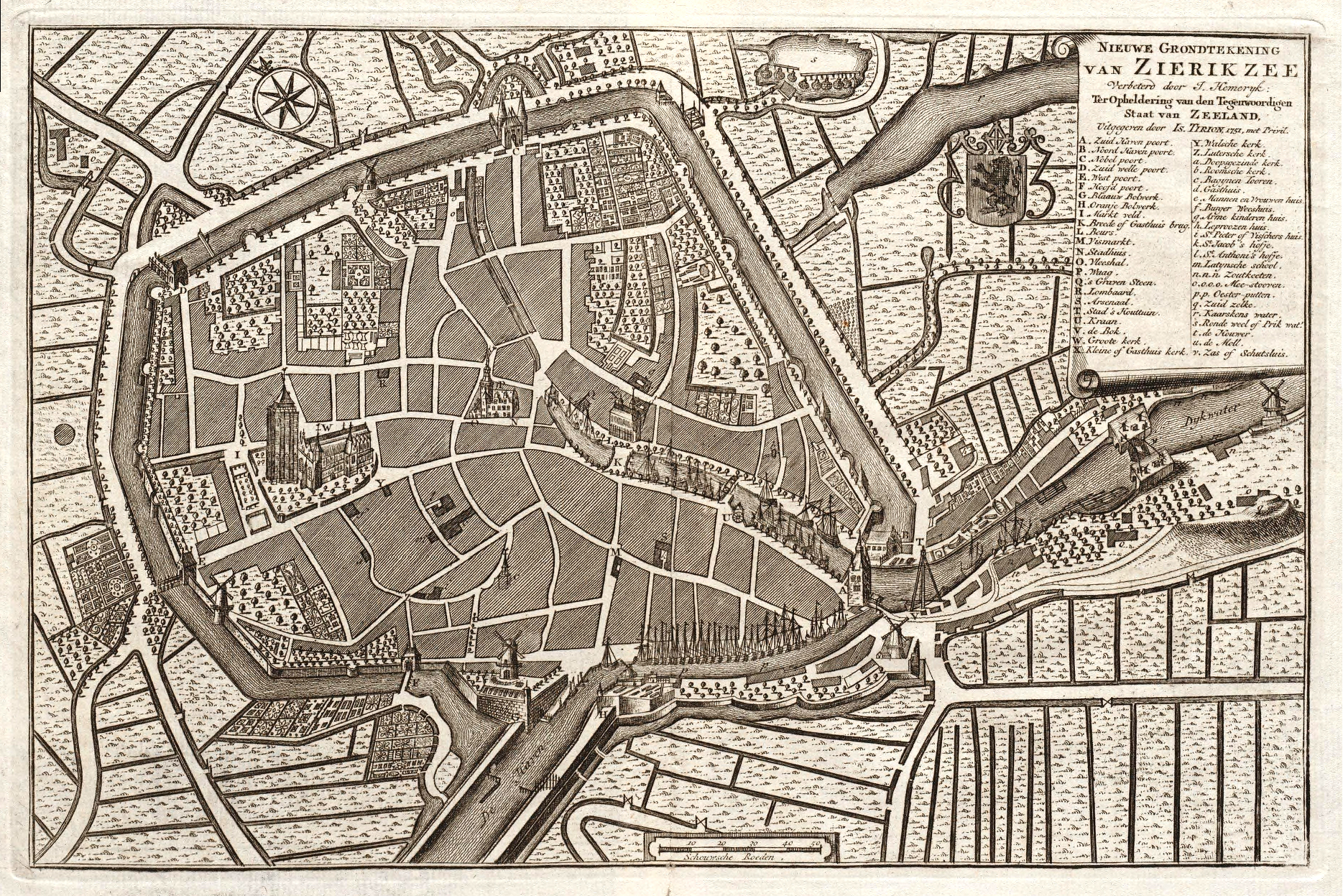
Although Zierikzee is the island’s largest town, you can easily wander around for a few hours and explore the squares, alleys, narrow streets, old ports, canals and view the town’s numerous monuments and remarkable facades. The historical center hasn’t lost its distinctive character. Here and there are still some remains of the old city wall, along with its three still existing medieval city gates: Nobelpoort, Zuidhavenpoort and Noordhavenpoort.
Visit Zierikzee for a wonderful day of shopping at local boutiques, eating and drinking in cozy restaurants and terraces, perusing art galleries, seeing exhibitions and visiting studios. In fact, legend has it that you will fall in love with the town and its history.

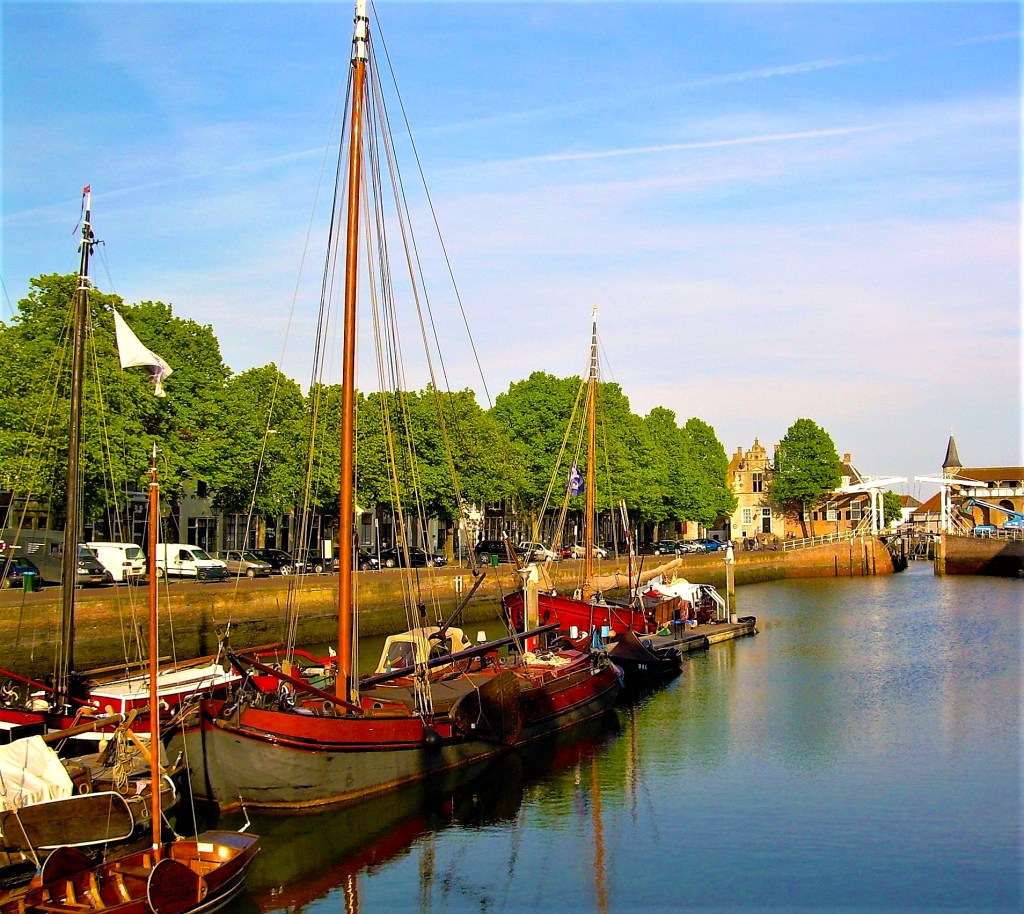

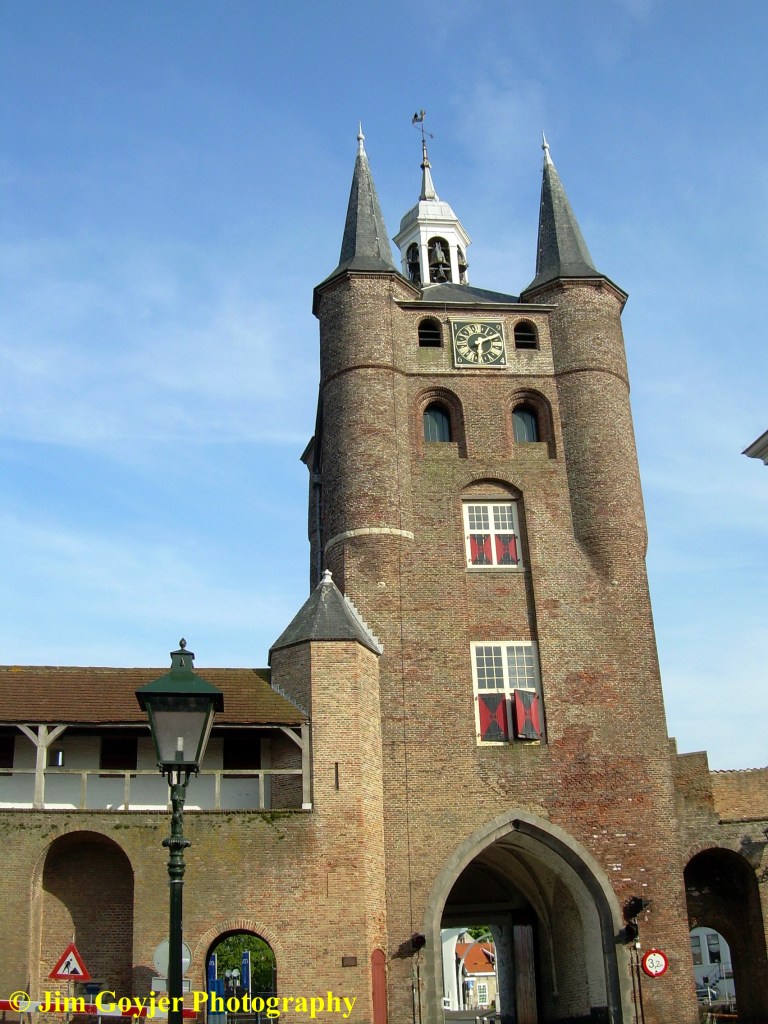

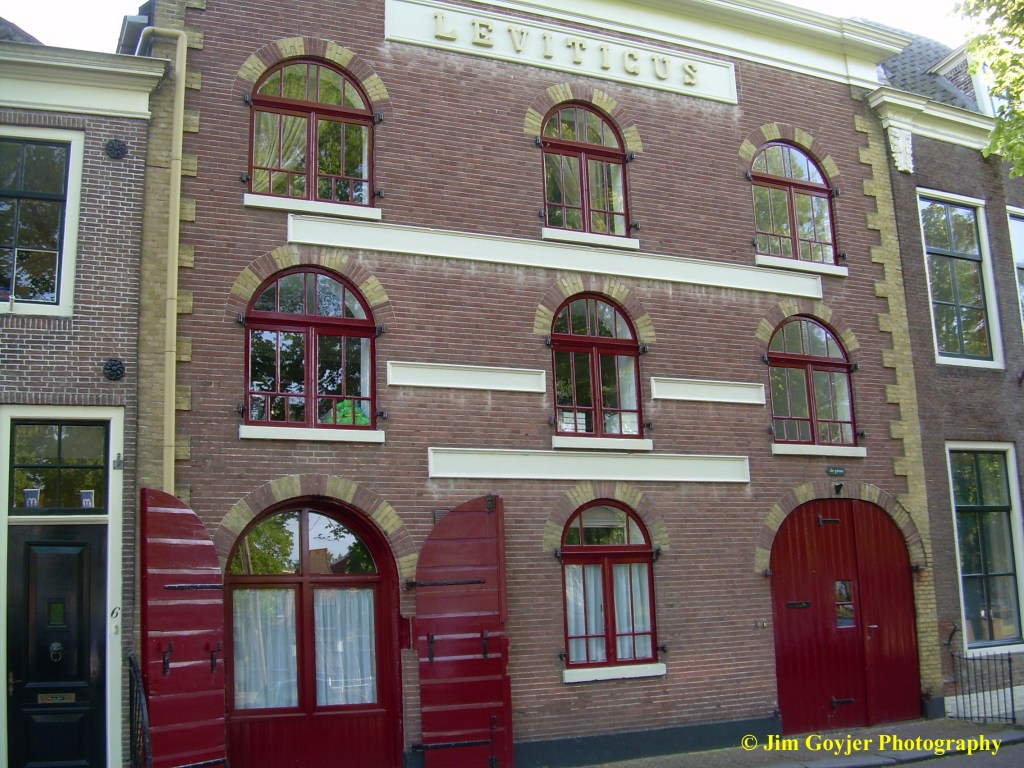


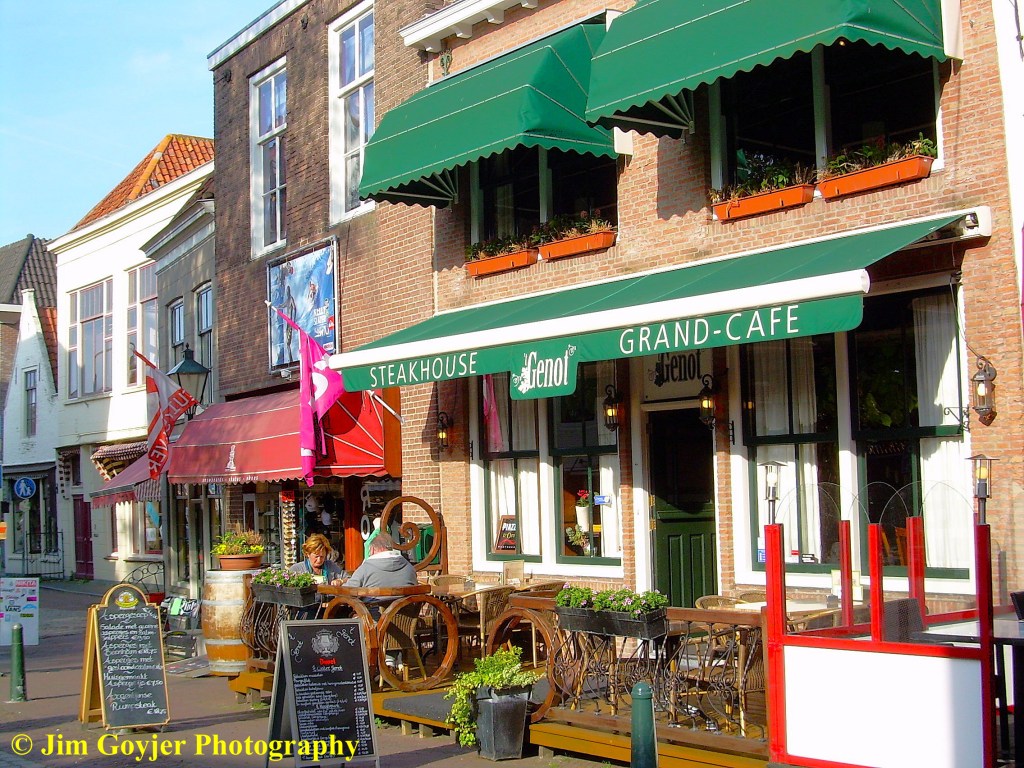

Feature/Banner Photo: View of Zierikzee_1 Creative Commons (CC)
 Jim And Nanci Travels
love the combined humor and information of Jim’s travel posts. I especially am impressed with his photography and would add to my wishlist a map of Zierikzee with inserted labels of where his photos were taken. Moreover, any input from Jim on places to stay or restaurants/cafes/bakeries/etc of excellence would be most appreciated.
If I visit Zierikzee, how many days of my travel should I allot to see it? Since I have not come remotely close to learning Dutch, should I look for a local Dutch guide to show me the out-of-the-way places of Zierikzee?
Jim, keep on writing and taking photos. I see a book in the future.
Stephen B. Strum/ Oregon/ USA
1/24/25